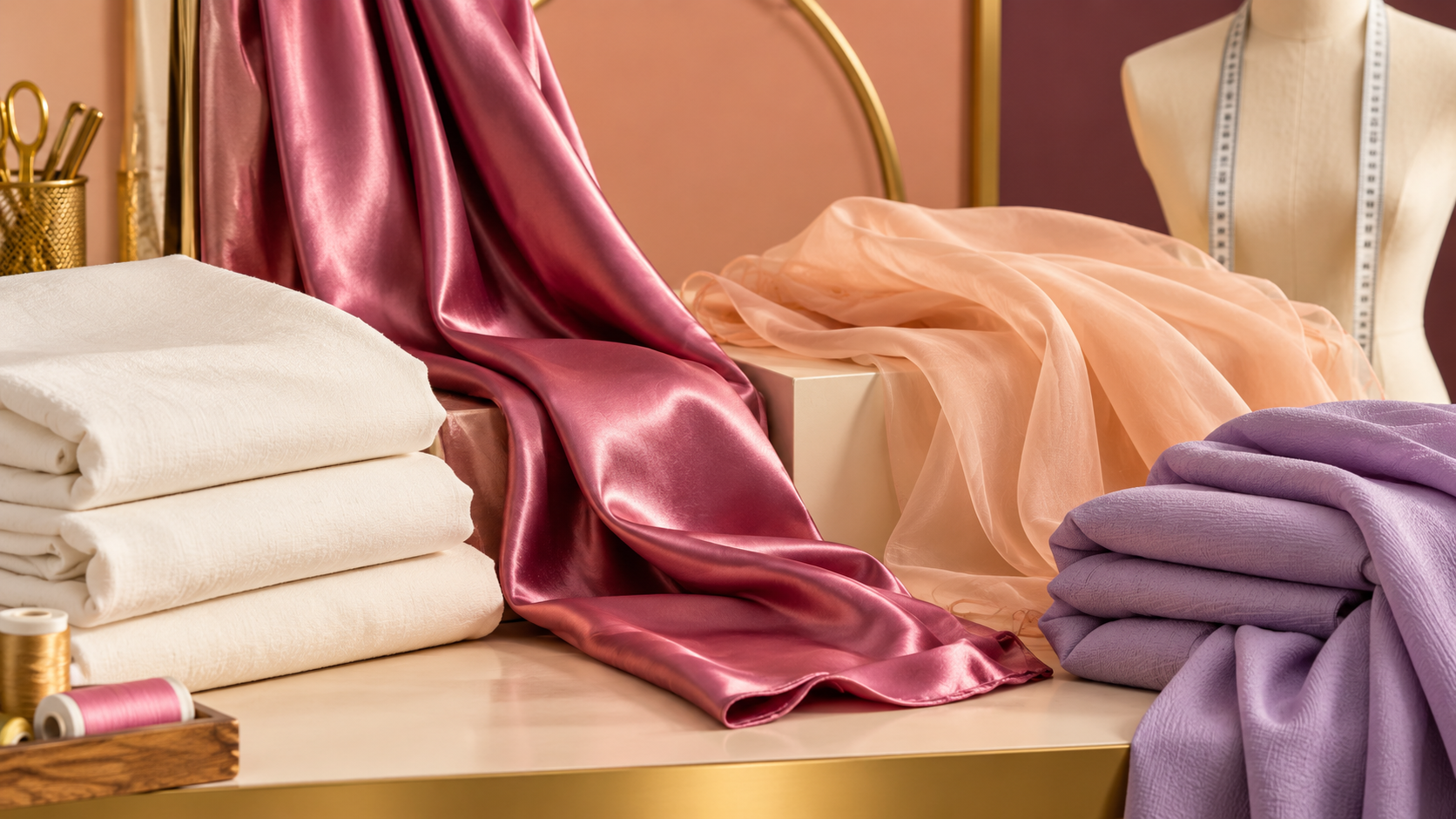
Choosing a fabric is one of the first decisions a fashion designer makes when developing a garment. A design that looks beautiful in a sketch may behave very differently once it is made with an actual fabric. The fall, weight, texture, movement and even the overall appearance of a garment can change depending on the material selected.
For beginners, terms such as cotton, silk, georgette and crepe can sometimes feel confusing. Each fabric has its own characteristics, and there is no single fabric that works perfectly for every type of clothing.
The right choice depends on the garment, the occasion, the climate, the desired silhouette and how the fabric is expected to behave.
This guide explains the basic characteristics of four commonly used fabrics and how beginners can make more informed choices when working on fashion designs.
Why Fabric Selection Matters in Fashion Design
Fabric is not simply a material used to make a garment. It can influence how the entire design looks and feels.
Imagine creating the same dress using cotton and silk. The design may remain identical on paper, but the finished garments can have completely different appearances. One may look relaxed and comfortable, while the other may appear more formal because of its surface, drape and structure.
Fabric selection can affect:
- The fall of the garment
- Overall silhouette
- Comfort and movement
- Texture and appearance
- Colour presentation
- Garment construction
- Embellishment
- Durability and care requirements
Understanding these differences is an important part of learning fashion design.
Cotton: Comfortable, Versatile and Practical
Cotton is one of the most familiar fabrics for beginners. It is available in many varieties, weights and finishes, which makes it useful for a wide range of garments.
Cotton is generally associated with comfort and breathability, making it a popular choice for warm-weather clothing and everyday garments. However, the exact feel and performance can vary depending on the type of cotton, weave and finishing used.
Cotton can be used for:
- Kurtas
- Shirts
- Dresses
- Skirts
- Casual trousers
- Children’s clothing
- Summer garments
- Traditional outfits
When Should You Choose Cotton?
Cotton can be a good choice when comfort is an important priority. It works particularly well for casual and daytime clothing where a softer, more natural appearance is desired.
It can also be a useful fabric for beginners practising garment construction because different cotton fabrics can help students understand basic cutting, stitching and finishing techniques.
One thing to remember is that some cotton fabrics wrinkle more easily than others. Therefore, the specific fabric should always be examined before deciding on the final garment.
Silk: Rich, Elegant and Naturally Luxurious
Silk has a long history in fashion and is widely associated with formal and festive clothing. Its smooth surface, natural sheen and distinctive drape can give garments a sophisticated appearance.
Different types of silk can behave quite differently. Some are lightweight and fluid, while others have more body and structure.
Silk can be used for:
- Sarees
- Blouses
- Evening dresses
- Bridal garments
- Gowns
- Festive wear
- Luxury fashion pieces
When Should You Choose Silk?
Silk is often suitable when the design calls for an elegant or formal appearance. It can work particularly well for garments where drape, surface richness or a refined finish is important.
However, beginners should remember that silk can require more careful handling during cutting and stitching. Some varieties can be slippery, delicate or more challenging to work with than stable fabrics.
This makes understanding the particular type of silk important before beginning construction.
Georgette: Light, Flowing and Movement-Friendly
Georgette is known for its flowing appearance and slightly textured surface. It is commonly used in garments where movement and soft draping are important.
Although the name georgette originally referred to a silk fabric, modern georgettes are also produced using other fibres, including synthetic fibres and blends. The weight, transparency and drape can therefore vary between fabrics sold under the same name.
Georgette is often used for:
- Sarees
- Dupattas
- Anarkalis
- Gowns
- Flowing dresses
- Skirts
- Occasion wear
When Should You Choose Georgette?
Georgette can be a good option when the design needs movement and a softer fall. It can create flowing silhouettes rather than stiff or heavily structured shapes.
Because some georgettes can be sheer, the designer may need to consider lining and layering during garment development.
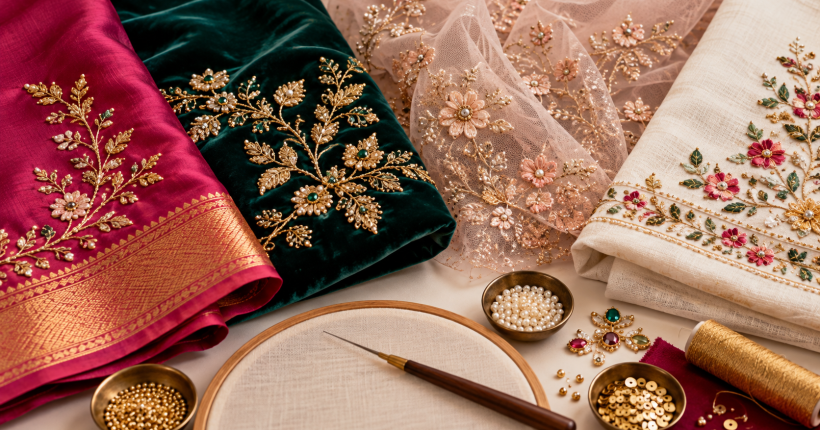
The amount of embroidery or embellishment also matters. Heavy decorative work can change the way a lightweight fabric moves, so designers need to consider the complete garment rather than looking at the base fabric alone.
Crepe: Soft Drape With a Distinctive Surface
Crepe is a broad category of fabric rather than one single material. It is generally recognised by its slightly textured or pebbled surface and its ability to create a smooth, flowing appearance.
Different crepes can have different levels of weight, stretch, texture and drape, depending on their fibre and construction.
Crepe can be used for:
- Dresses
- Gowns
- Sarees
- Trousers
- Blouses
- Formal suits
- Occasion wear
When Should You Choose Crepe?
Crepe can work well when a designer wants a garment to have movement without an overly shiny surface. It can be particularly useful for flowing dresses and silhouettes where the fabric needs to fall smoothly.
Its appearance can also complement prints and embroidery without competing heavily with the design.
However, the term “crepe” covers many different fabrics, so designers should always examine the actual material rather than assuming that every crepe will behave in the same way.
Cotton vs Silk: Which One Is Better?
Neither fabric is universally better. The decision depends on the purpose of the garment.
Choose cotton when:
- Comfort is a major priority
- The garment is intended for daytime use
- A relaxed appearance is desired
- The weather is warm
- The design suits a natural, less formal look
Choose silk when:
- The garment is intended for a formal occasion
- A richer appearance is required
- The design benefits from natural sheen
- A more luxurious visual effect is desired
- The garment needs a more defined drape or structure
For example, a lightweight cotton dress may be ideal for a summer day, while a silk outfit may be more suitable for a wedding or formal celebration.
Georgette vs Crepe: Understanding the Difference
Georgette and crepe can sometimes look similar because both can have textured surfaces and flowing characteristics.
The difference becomes clearer when you examine the individual fabric.
Georgette is often chosen for its light, fluid movement, while crepe can provide a slightly denser or more controlled fall depending on its construction.
For a design that needs a very light, flowing effect, georgette may be worth considering. For a silhouette that needs a smoother and somewhat more substantial fall, a suitable crepe may be a better option.
The exact result depends on the particular fabric, so touching and testing the material is always useful before finalising a design.
How to Choose Fabric for a Garment
Beginners often make the mistake of selecting a fabric simply because they like its colour or appearance. A better approach is to consider the design first.
1. Look at the Silhouette
Ask how you want the garment to fall.
Does it need to remain structured? Should it move freely? Should it sit close to the body?
A flowing silhouette may require a different fabric from a structured jacket.
2. Consider the Occasion
A fabric suitable for everyday wear may not be the right choice for bridal or evening clothing.
Think about whether the garment is intended for:
- Daily wear
- Office wear
- Casual outings
- Festivals
- Weddings
- Parties
- Fashion shows
3. Think About the Climate
The weather can have a significant effect on fabric selection.
For warm conditions, lighter and more breathable fabrics may be more comfortable. However, lining, garment construction and the number of layers also affect how warm an outfit feels.
4. Check the Drape
Hold the fabric from one end and allow it to fall naturally.
Does it hang softly? Does it maintain its shape? Does it create folds? Does it feel stiff?
This simple test can tell you a lot about whether the fabric suits your design.
5. Check the Weight
A fabric may look lightweight but feel surprisingly heavy once several layers or embellishments are added.
Think about the final garment rather than just the fabric by itself.
6. Consider Embellishment
If your design includes embroidery, beads, sequins or other decorative elements, check whether the fabric can support them.
A delicate, lightweight fabric may require a different construction approach from a stronger, more stable material.
Why Fashion Students Should Study Different Fabrics
Fabric knowledge is not something that can be fully understood by memorising definitions.
Students learn much more when they can actually handle different materials, compare their textures and see how they behave during cutting, stitching and draping.
A practical fashion education can introduce learners to:
- Fabric identification
- Textile properties
- Draping
- Garment construction
- Pattern making
- Fashion illustration
- Surface ornamentation
- Fashion CAD
- Styling
- Portfolio development
Working with different fabrics also helps students understand why a particular design may work well with one material but not another.
Fabric Knowledge in Fashion Design Training
Understanding textiles is an important part of fashion design training because designers need to make decisions that connect creativity with practical garment development.
At Skill Haara Fashion Academy, students can explore areas such as textile knowledge, fashion illustration, pattern making, draping, garment construction, Fashion CAD, styling and portfolio development as part of their fashion education. The academy focuses on practical studio learning and project-based exposure alongside design fundamentals.
Cotton, silk, georgette and crepe each have different characteristics, so choosing the right fabric depends on the garment, occasion, climate and desired finish. For beginners, learning to observe a fabric’s drape, weight, texture and behaviour can make the design process much easier. With regular practice and exposure to different materials, fabric selection becomes a more natural part of fashion designing.