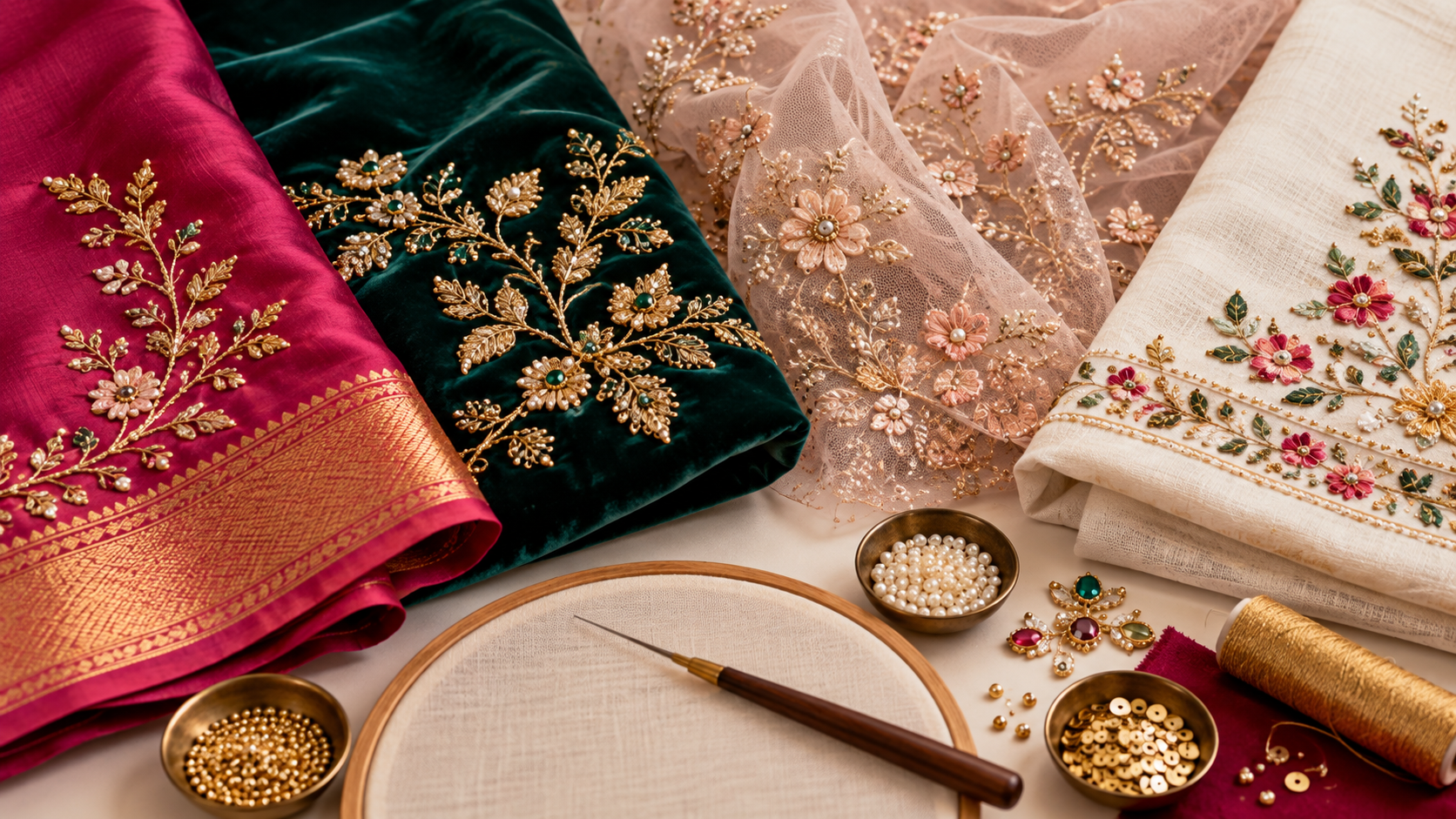
Aari embroidery can completely change the appearance of a garment. A simple fabric can look rich and detailed when it is decorated with carefully planned Aari work, beads, sequins, stones, zari and other embellishments.
But Aari embroidery doesn’t behave the same way on every fabric.
The thickness, texture, stretch, weight and surface of the material can affect how easily the needle moves through it and how well the finished design holds its shape. This is why choosing the right fabric is an important part of learning and practising Aari embroidery.
Silk, velvet, net and cotton are commonly used for different types of garments, but each one requires a slightly different approach.
Let’s look at what makes each fabric suitable for Aari work and what to keep in mind while working on it.
Aari Work on Silk
Silk is one of the most popular fabrics for decorative embroidery. Its smooth surface and elegant appearance make it particularly suitable for bridal wear, festive outfits and designer garments.
Aari work can look especially attractive on silk because embellishments stand out clearly against the fabric.
When working on silk, the main challenge is handling the delicate surface carefully. Excessive tension can affect the fabric, while rough handling may leave unwanted marks.
Fine and controlled stitches are usually more suitable when working with lighter silk fabrics. The embroidery design should also be planned according to the weight of the material.
For bridal blouses and traditional outfits, silk can be combined with:
- Zari work
- Beads
- Sequins
- Cutdana
- Pearls
- Decorative stones
- Resham threads
The choice of embellishments should depend on the garment and the type of silk being used.
For heavier silk fabrics, more detailed embroidery can be used without making the garment appear overly delicate. Lighter silk requires a more careful approach so that the embroidery doesn’t overpower the fabric.
Aari Work on Velvet
Velvet has a completely different surface from silk. It is thicker, heavier and has a soft pile that gives the fabric its distinctive appearance.
Aari embroidery on velvet can create a luxurious look, especially for bridal blouses, wedding outfits, jackets and evening garments.
One of the main things to consider when working on velvet is its thickness. The Aari needle needs to pass through the fabric properly without damaging the surface.
Heavy embellishments can work well on velvet because the fabric itself has enough weight to support detailed designs. Stones, beads, zari and metallic elements can create a striking contrast against darker velvet shades.
Deep colours such as maroon, navy, wine, emerald and black are often suitable for heavily embellished velvet garments, although the final colour combination depends on the design and outfit.
When working on velvet, the embroidery should be planned carefully because correcting mistakes can be more difficult than working on a simpler fabric.
Aari Work on Net
Net fabric is lightweight and open in structure, making it quite different from both silk and velvet.
It is frequently used for sleeves, dupattas, overlays, sarees and bridal garments. Aari embroidery can give net fabric a delicate and detailed appearance.
The biggest consideration is the structure of the net.
Large or heavy embellishments may place too much weight on a delicate net fabric. If the embroidery is too dense, the material can lose its natural fall.
Lighter embroidery techniques can work particularly well on net. Small beads, sequins, thread work and delicate motifs can add detail without making the fabric look too heavy.
When designing Aari work for net, the spacing between motifs is also important. Leaving enough open space can preserve the light appearance of the material.
Net can be especially useful when the embroidery is intended to create a decorative border, floral pattern or scattered motif rather than covering the entire fabric.
Aari Work on Cotton
Cotton is one of the easiest fabrics for beginners to practise embroidery on because it is generally easier to handle and available in many different weights.
Its stable surface makes it suitable for learning basic Aari techniques, practising motifs and experimenting with different threads and embellishments.
Cotton garments can feature both simple and detailed embroidery depending on the thickness of the fabric.
For everyday clothing, smaller floral motifs, leaves, geometric patterns and simple borders can give cotton garments a personalised appearance.
Heavier cotton fabrics can also support more decorative Aari work. Depending on the garment, embroidery can be combined with beads, sequins, thread and other embellishments.
Because cotton is available in many varieties, it is important to consider the particular fabric before selecting the embroidery style. A lightweight cotton may require a different approach from a thick cotton material.
Which Fabric Is Easier for Aari Beginners?
For someone learning Aari embroidery for the first time, cotton can be a practical fabric to begin with.
It is generally easier to hold, mark and practise stitches on a stable cotton surface. Once the basic techniques become more comfortable, learners can experiment with fabrics such as silk, velvet and net.
Each material teaches something different.
Silk helps learners develop control and precision. Velvet requires attention to fabric thickness and surface texture. Net requires careful handling because of its delicate structure. Cotton provides a relatively stable surface for practising basic techniques.
Working with different fabrics can therefore help an embroidery learner become more adaptable.
Choosing the Right Aari Design for the Fabric
The fabric should be considered before choosing an embroidery design.
A design that looks beautiful on a heavy silk blouse may not produce the same result on lightweight net. Similarly, a delicate floral pattern may get lost on a heavily textured velvet surface.
Consider factors such as:
- Fabric thickness
- Surface texture
- Weight of embellishments
- Size of the motif
- Stitch density
- Garment type
- Colour combination
- Intended use of the outfit
For bridal clothing, embroidery may be more detailed and heavily embellished. For everyday garments, a smaller and lighter design can create a more balanced appearance.
Thread and Embellishment Choices Matter
The fabric isn’t the only factor that determines the final result.
The thread, needle, beads, stones and other materials also need to work well with the fabric.
For example, delicate materials may require lighter embellishments, while heavier fabrics can accommodate more substantial decorative elements.
Colour selection matters too. Contrasting thread and embellishment colours can make a design stand out, while similar shades can create a more subtle effect.
A good Aari design isn’t simply about adding more decoration. The materials need to work together so that the embroidery complements the garment.
Why Fabric Knowledge Matters in Aari Embroidery
Aari embroidery involves more than learning how to create stitches.
Understanding how different fabrics behave can help an embroiderer make better decisions about designs, threads, embellishments and stitch density.
Someone working on a bridal blouse, for example, needs to think about how the fabric will support heavy embellishments. A person creating embroidery on a net dupatta has different requirements because the material is much lighter.
This practical understanding becomes particularly useful when working on customised garments.
Learning to adjust the embroidery technique according to the material can also help improve the finish of the final garment.
Learning Aari Embroidery
Aari embroidery can be developed through regular practice and by working with different fabrics and design styles. Starting with basic stitches and gradually experimenting with more detailed patterns can help learners build confidence.
Practising on different materials is also useful because it introduces the challenges associated with fabric thickness, surface texture and embellishment weight.
For those interested in developing these skills professionally, structured Aari training can provide an opportunity to learn embroidery techniques and understand how they are applied to different garments.
Learn Aari Embroidery with Skill Haara
If you’re looking for Aari training in Trivandrum, Thrissur or in Aluva. Skill Haara offers a Career Program in Aari Embroidery and Bridal Couture.
For course details and enquiries, visit the contact Skill Haara.