Fashion has always been closely connected with creativity, but modern fashion design also depends on technology. Designers today use digital tools to develop ideas, create technical drawings, work on patterns and visualise garments before they move into production.
One of the important technologies used in this process is Fashion CAD.
If you are new to fashion designing, the term CAD might sound technical. However, you do not need to be an expert in technology to understand it. Fashion CAD is essentially a way of using computer-based design tools to make different parts of the fashion design process more organised, precise and flexible.
For students considering fashion design training, learning CAD can be a useful part of developing modern fashion skills.
What Is Fashion CAD?
CAD stands for Computer-Aided Design. In fashion, CAD refers to digital tools and software used for creating, developing and modifying fashion designs.
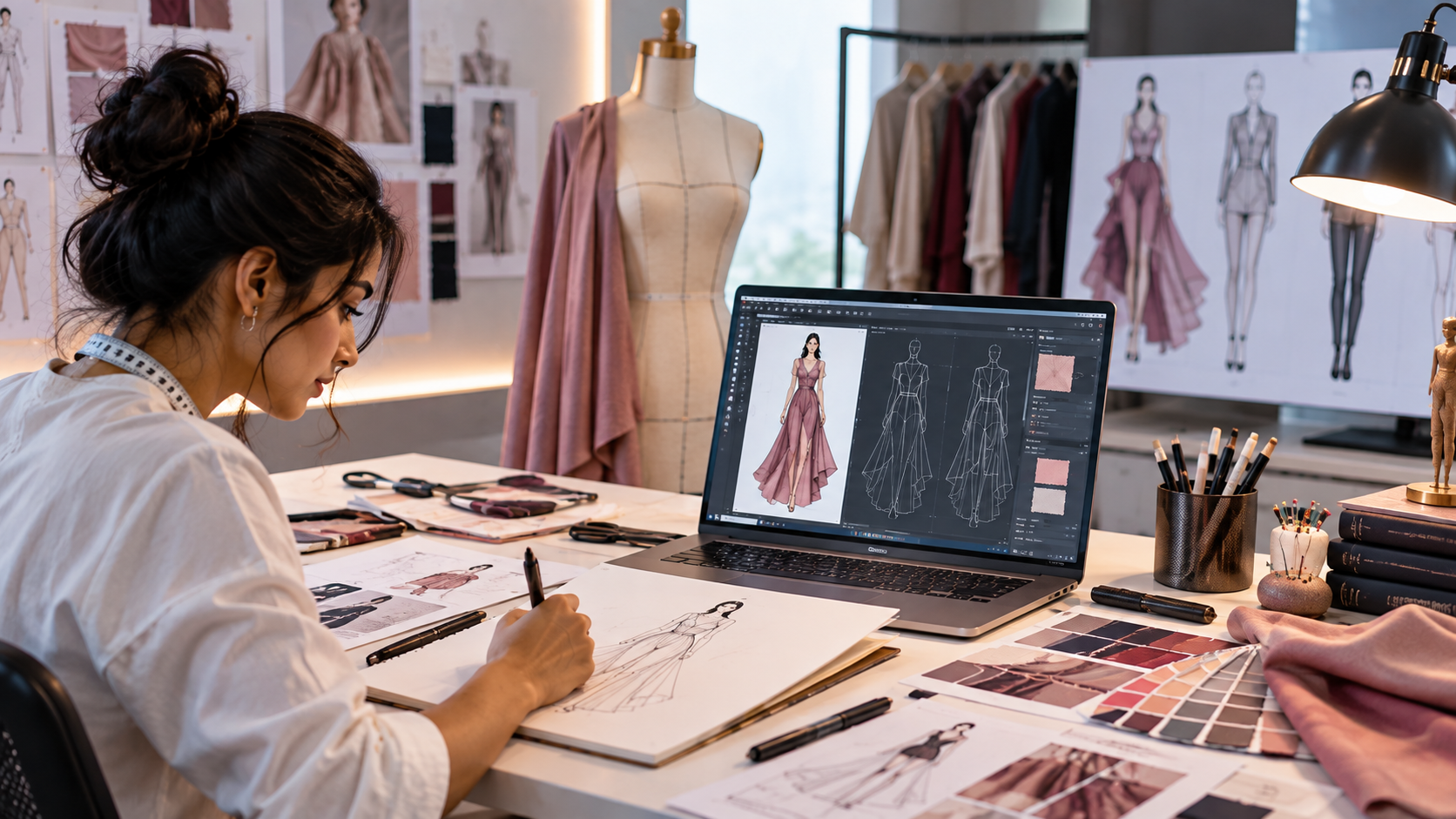
Instead of creating every design only on paper, designers can use a computer to produce digital sketches, technical drawings, patterns and, depending on the software, three-dimensional garment visualisations.
Fashion CAD can be used at different stages of apparel development. Some software focuses mainly on technical drawings, while other programs support pattern development, grading or 3D garment simulation. The exact features depend on the software being used.
This makes Fashion CAD different from simply drawing a fashion illustration digitally. It can become part of a wider workflow that connects creative ideas with technical garment development.
Why Is Fashion CAD Important?
A fashion designer may begin with a simple idea, sketch or reference. Turning that idea into a finished garment requires several steps.
Designers need to think about:
- Garment shape and proportions
- Fabric and colour
- Pattern construction
- Measurements
- Stitching and finishing
- Technical details
- Fit and presentation
Digital design tools can make many of these tasks easier to organise and revise.
For example, if a designer wants to change the colour, shape or certain details of a digital design, the changes can often be made without starting the entire design again. Depending on the software, designers can also create multiple versions of the same concept and compare them before moving further into development.
How Is CAD Used in Fashion Design?
Fashion CAD is not limited to one particular task. Different software programs support different parts of the design process.
1. Digital Fashion Illustration
Designers can create digital versions of their fashion sketches using computer-based tools. Digital illustration allows them to experiment with colours, silhouettes, prints, textures and design details.
It can also make it easier to store and organise different versions of a design.
2. Technical Sketching
A fashion illustration communicates the creative appearance of a garment, while a technical sketch focuses more on construction details.
Technical drawings can show elements such as seams, pockets, collars, sleeves, fastenings and other garment components. These drawings can help communicate how a garment is intended to look and be constructed.
3. Digital Pattern Development
Some fashion CAD systems are designed for pattern-related work. Designers and patternmakers can create, modify and manage digital patterns rather than relying entirely on manual drafting.
Pattern-focused CAD systems may also support grading and other technical processes used in apparel development.
4. 3D Garment Visualisation
Some modern fashion software allows designers to create three-dimensional versions of garments.
A 3D workflow can help designers visualise how a garment may look on a digital body or how different fabrics and design elements may appear. This gives designers another way to review a concept before producing a physical sample.
5. Colour and Fabric Exploration
Digital tools can make it easier to experiment with different colours, prints and fabric appearances.
A designer working on one garment concept might create several colour variations without physically producing every version. This can be particularly useful while developing a collection.
Fashion CAD vs Traditional Fashion Sketching
Traditional sketching is still an important skill for fashion designers. Being able to communicate an idea with pencil and paper helps develop observation, proportion and visual thinking.
Fashion CAD does not necessarily replace these skills.
Instead, it adds another layer to the design process.
A designer might first sketch an idea manually, develop the concept further and then use digital tools to create a more refined technical drawing or digital version. In other situations, the design may be created digitally from the beginning.
Understanding both creative and digital methods can therefore give learners a more complete view of the fashion design process.
What Are the Benefits of Learning Fashion CAD?
Learning Fashion CAD can provide several practical advantages for students and aspiring designers.
Better Design Accuracy
Digital tools allow designers to work with greater precision when creating technical drawings and patterns.
Easier Design Modifications
Digital files can generally be edited more easily than a finished hand-drawn design. Designers can test different versions without recreating everything from scratch.
Faster Experimentation
Different colours, silhouettes, patterns and design variations can be explored digitally, making experimentation more convenient.
Better Design Presentation
Digital designs can be organised into professional presentations and portfolios. This can help designers communicate their ideas to teachers, clients, teams or potential employers.
Understanding Modern Workflows
Fashion businesses increasingly use digital tools across different stages of product development. Learning CAD can help students become familiar with the type of digital workflow used in contemporary apparel design.
What Skills Do You Need to Learn Fashion CAD?
You do not have to be an expert artist or computer professional before starting Fashion CAD.
However, having a basic understanding of fashion design can make the learning process easier.
Some useful skills include:
- Basic fashion illustration
- Understanding garment construction
- Knowledge of fabrics and textiles
- Pattern-making fundamentals
- Understanding garment measurements
- Colour and design principles
- Attention to detail
- Basic computer skills
- Creative thinking
The important point is that CAD is a skill that can be developed through practice. Beginners can start with basic digital drawing and technical design tasks before moving towards more advanced applications.
Is Fashion CAD Useful for Beginners?
Yes. Beginners can learn Fashion CAD as part of their broader fashion education.
However, it is useful to understand that CAD should not be treated as a replacement for fundamental fashion skills. A student who understands garment construction, pattern making, textiles and design principles can make better use of digital tools.
For example, knowing how a sleeve is constructed is important even when the sleeve is being developed digitally. Similarly, understanding fabric behaviour can help when working with digital garment visualisation.
This is why a balanced approach to fashion education can be valuable.
What Kind of Careers Use Fashion CAD?
Fashion CAD skills can be relevant to several areas of the apparel industry. Depending on their broader qualifications and experience, learners may explore roles such as:
- Fashion CAD Designer
- Fashion Designer
- Technical Designer
- Pattern Designer
- Apparel Product Developer
- Fashion Illustrator
- Apparel Merchandiser
- Product Development Executive
The actual responsibilities can vary between companies and job roles.
How Can Students Start Learning Fashion CAD?
A good starting point is to learn the fundamentals of fashion design first and then gradually introduce digital tools into the workflow.
A structured learning path can include:
Step 1: Learn fashion fundamentals
Understand silhouettes, proportions, fabrics, colours and basic garment construction.
Step 2: Develop fashion illustration skills
Learn how to communicate clothing ideas through sketches and visual concepts.
Step 3: Understand technical drawings
Learn how garments are represented from a technical perspective.
Step 4: Explore CAD tools
Start working with digital drawing, garment design and pattern-related functions.
Step 5: Practise with projects
Create digital versions of garments, collections and technical designs.
Step 6: Build a portfolio
Organise selected digital work into a portfolio that demonstrates your design and technical abilities.
Practical projects are especially useful because CAD becomes easier to understand when you actually use it to solve design tasks.
Learning Fashion CAD Through Fashion Design Training
For students who want to learn fashion design as a career skill, fashion design training can provide an opportunity to study CAD alongside other important areas of fashion.
At Skill Haara Fashion Academy, Fashion CAD is included among the learning areas in its fashion programs, alongside fashion illustration, pattern making, draping, garment construction, textile studies, portfolio development and fashion marketing. The academy describes its approach as practical, with studio learning, projects and professional mentorship.
Skill Haara also has fashion learning centres in Trivandrum, Thrissur and Aluva, giving students options to access its fashion programs across these locations.
For someone starting from the basics, learning CAD as part of a wider fashion curriculum can help connect creative design ideas with technical skills.
Final Thoughts
Fashion CAD has become an important part of modern digital fashion design. It allows designers to develop technical drawings, work with digital patterns, explore design variations and, with suitable software, visualise garments in 3D.
But learning the software alone is not enough. Strong fashion fundamentals, creativity, garment knowledge and practical experience remain important.
For beginners, the best approach is to see Fashion CAD as one part of a larger fashion skill set. With regular practice and project-based learning, digital design tools can become a useful addition to your creative and technical abilities.
If you are planning to build a career in fashion, exploring fashion design training that combines traditional design fundamentals with Fashion CAD can be a practical starting point. Skill Haara offers fashion programs with Fashion CAD and related practical skills through its centres in Trivandrum, Thrissur and Aluva.