Fashion does not always require new fabric, expensive materials or an entirely new wardrobe. Sometimes, an unused shirt, an old pair of jeans or a dress that no longer fits your style can become the starting point for something completely different. With thoughtful design choices and practical garment-making skills, existing clothes can be transformed into fresh, wearable creations.
Upcycling has become an interesting approach for people who want to experiment with clothing design while making better use of the garments they already own. It combines imagination, fabric knowledge and construction techniques to give unused clothing a new purpose. For aspiring designers, learning how to upcycle garments can also encourage creative problem-solving and a more responsible approach to fashion.
What Is Clothing Upcycling in Fashion Design?
Clothing upcycling is the process of transforming existing garments or leftover textile materials into new products with a different appearance, purpose or design. Instead of discarding an item or breaking it down entirely into raw fibres, the designer works with its available materials and features to develop something new.
For example, an oversized shirt could be redesigned as a cropped top, an old denim jacket could become a statement piece with fabric panels, or several unused garments could be combined to create a patchwork skirt.
Upcycling is different from simply repairing damaged clothing. Repairing aims to restore an item’s original condition, while upcycling introduces a new design direction or adds creative value. The final result depends on the condition of the material, the designer’s imagination and the techniques used during reconstruction.
Why Is Upcycling Important for Sustainable Fashion?
The clothing industry uses substantial quantities of textiles, water, energy and other resources. Extending the useful life of existing garments is one practical way to reduce the need for new materials and limit avoidable clothing waste.
Upcycling supports sustainable fashion in several ways.
Making better use of existing materials: Garments that are no longer worn can provide fabric, buttons, zippers, linings and decorative elements for new designs.
Reducing unnecessary disposal: Transforming unwanted clothing into useful products can help prevent wearable textiles from being discarded prematurely.
Encouraging individual creativity: Upcycled garments often have distinctive combinations of colours, textures and construction details that are difficult to reproduce exactly.
Supporting small fashion businesses: Designers and boutique owners can explore upcycled collections without depending entirely on newly purchased fabric, although labour and finishing costs still need to be considered.
Promoting thoughtful clothing choices: Working with existing garments encourages people to consider durability, material use and the long-term value of what they wear.
Upcycling is not automatically impact-free. Washing, dyeing, adding new materials and using energy during production can still have environmental costs. The most responsible approach is to make useful products that are durable, wearable and likely to be used for a long time.
Creative Techniques for Upcycling Old Clothes
Several techniques can help transform familiar garments into original fashion pieces. The best method depends on the material available, the condition of the garment and the intended design.
1. Garment Reconstruction
Garment reconstruction involves changing the shape, proportions or structure of an existing item. A garment may be shortened, reshaped, divided or assembled differently to create a new silhouette.
An oversized shirt, for instance, can be redesigned with a fitted waist, altered sleeves or a new neckline. A long dress may be converted into a coordinated top and skirt if its construction and fabric allow it.
Before cutting, examine the garment’s seams, closures, lining and fabric condition. Plan the new design around these existing features to minimise unnecessary waste and avoid removing material that may be useful later.
2. Denim Upcycling
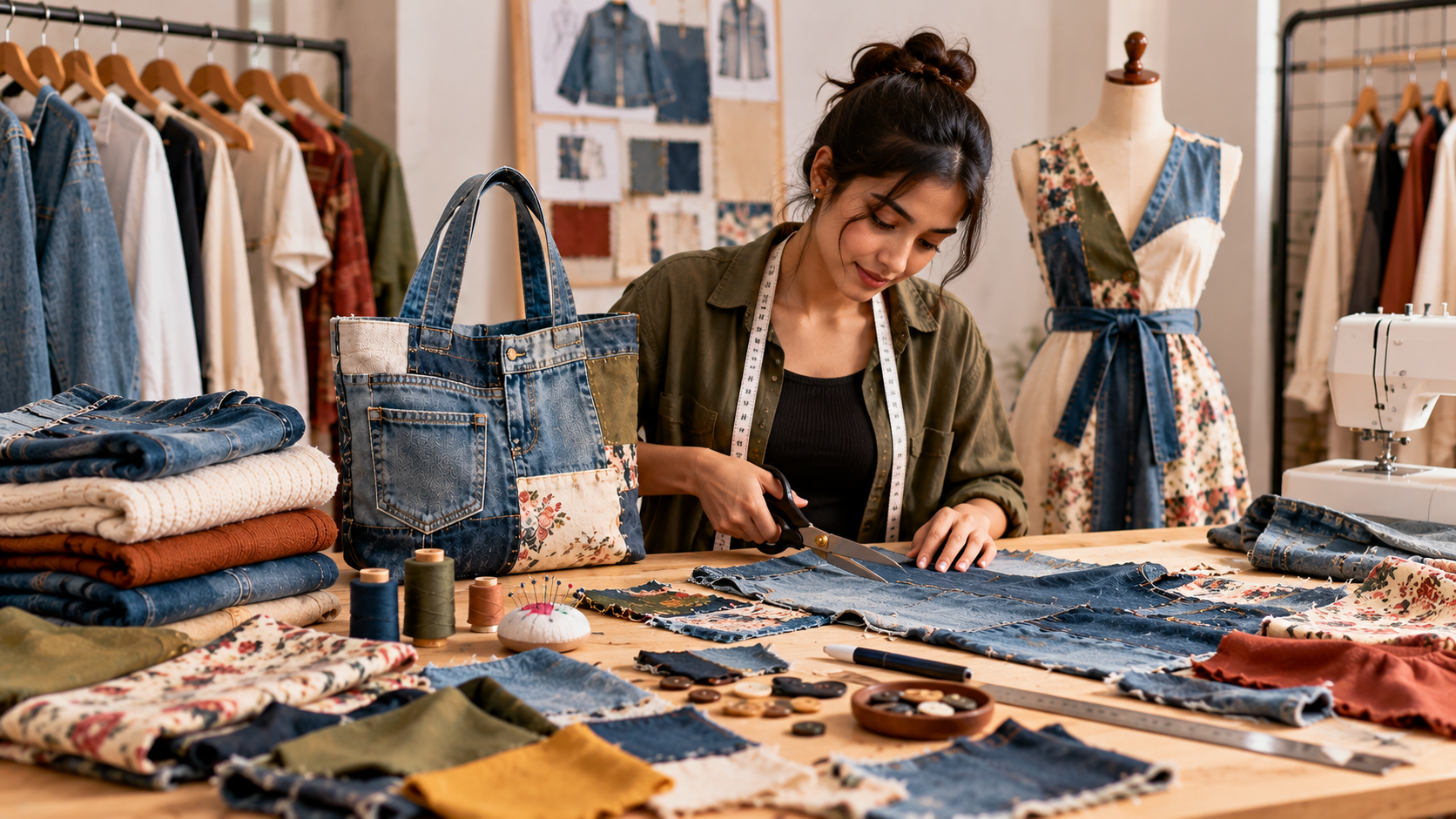
Denim is a popular material for upcycling because it is often durable and can be combined with other fabrics. Old jeans, jackets and skirts provide several opportunities for creative redesign.
Possible projects include converting jeans into a tote bag, adding contrasting fabric to a denim jacket, creating a patchwork skirt from worn trousers or using denim panels to reinforce another garment.
Different denim weights can behave differently during stitching. Thick seam intersections may require suitable needles and careful machine handling. Inspect worn areas before construction so that weak sections do not compromise the finished item.
3. Patchwork and Fabric Paneling
Patchwork involves joining smaller pieces of fabric to create a larger surface or decorative pattern. It is especially useful when several garments have areas that remain in good condition even though the original items are no longer wearable.
Designers can combine cotton shirts, denim pieces or fabric remnants to create panels for jackets, skirts, bags and other accessories. The arrangement may follow a planned colour scheme or use contrasting textures for a more expressive appearance.
For a balanced result, sort fabric pieces by weight, stretch and condition before joining them. Similar materials are often easier to assemble because they respond more consistently during stitching and washing.
4. Adding Embroidery and Surface Decoration
Embroidery, appliqué and other surface embellishment methods can refresh garments without changing their entire structure. These techniques are useful when an item is still wearable but looks outdated, plain or slightly worn.
A simple cotton shirt can receive embroidered details around the collar or cuffs. A denim jacket may be decorated with fabric appliqué, while a plain skirt can be updated with carefully positioned decorative stitching.
The design should complement the original garment rather than cover every available area. Before applying decoration, check whether the fabric can support the additional weight and whether the embellishment will remain comfortable during wear.
5. Converting Garments Into Accessories
Clothing that cannot easily be worn again may still contain useful fabric sections. These can be transformed into accessories such as tote bags, pouches, headbands, fabric belts and small storage items.
For example, sturdy trouser legs can provide material for a simple bag, while colourful shirt fabrics can be used for patchwork accessories. Buttons, pockets and belt loops may also become useful design features.
Choose material according to the accessory’s purpose. Products that need to carry weight require strong fabric, reinforced seams and suitable handles. Soft or delicate materials may be better suited to lightweight accessories.
6. Combining Different Garments
Combining two or more garments can produce designs with unusual proportions, colour combinations or layered details. This approach requires careful planning because the original pieces may have different sizes, fabric weights and construction methods.
A designer might combine the sleeves of one shirt with the body of another, attach a contrasting panel to a skirt or use sections of different garments to develop a colour-blocked jacket.
Start by deciding which garment will form the main structure. Use the second garment to add specific design features, and check the fit before completing the seams. Combining materials successfully depends on understanding how each fabric stretches, drapes and responds to stitching.
7. Restyling Through Fit and Silhouette Changes
Sometimes, a garment needs only a few structural adjustments to become attractive again. Altering its length, sleeve shape, waistline or overall fit can create a noticeably different appearance.
A loose dress may be reshaped with darts or carefully positioned seams. Long trousers can be shortened into a different style, while an outdated skirt may be redesigned with a new hemline or added panels.
Accurate measurements are essential during these alterations. Mark the intended changes first, try temporary stitching where practical, and check the garment on the intended wearer before making permanent adjustments.
8. Creative Use of Leftover Fabric
Small fabric remnants are often overlooked because they may not be large enough for an entire garment. However, they can still contribute to collars, cuffs, pockets, waistbands, decorative inserts and contrast panels.
Keeping leftover pieces organised by fabric type, colour and size makes it easier to identify suitable combinations for future projects. It also helps designers plan more efficiently instead of buying new material for every small detail.
This technique encourages resourcefulness and helps learners understand how material limitations can influence the creative process.
How to Plan an Upcycling Project From Start to Finish
A successful upcycling project requires more than an attractive idea. A clear process helps prevent wasted material and improves the quality of the final product.
Step 1: Select the Right Garment
Choose an item with a fabric condition and structure that suit the planned design. Check for tears, stains, thinning areas, damaged fastenings and signs of fabric deterioration.
Wash and dry the garment according to its care instructions before beginning. This helps prepare the material for cutting and construction.
Step 2: Decide on the Final Design
Identify what the original garment could become. Sketch a few possible designs and consider the material available, the intended fit and the construction work required.
Avoid planning a design that depends on more usable fabric than the garment actually contains.
Step 3: Inspect and Measure the Material
Examine the fabric’s grain, stretch, thickness and drape. Measure the usable sections and identify areas that should be avoided because of damage or excessive wear.
Existing seams, pockets and closures may be retained if they suit the new design.
Step 4: Prepare the Garment for Cutting
Remove unwanted components carefully and preserve useful buttons, zippers, labels or decorative details when appropriate. Mark cutting lines clearly and allow enough material for seam allowances and finishing.
When working with an unfamiliar design, test the proposed changes with temporary stitching or a mock-up if suitable fabric is available.
Step 5: Assemble and Fit the New Design
Join the prepared sections using stitching methods appropriate to the material. Check the fit, balance and comfort before completing the final finishing work.
Pay attention to bulky seams where multiple fabric layers meet, especially when combining denim or other heavy textiles.
Step 6: Finish and Inspect the Garment
Trim loose threads, secure seams, finish raw edges and check closures. Inspect the item for uneven stitching, uncomfortable edges, weak attachment points and other construction problems.
Clean the finished garment according to the care requirements of its materials and embellishments.
Step 7: Evaluate Its Everyday Use
Consider whether the redesigned item is comfortable, functional and suitable for regular wear. A successful upcycling project should offer more than an unusual appearance; it should also serve a practical purpose.
Essential Skills for Fashion Upcycling
Learning to upcycle clothing can help aspiring fashion designers strengthen several important skills.
Fabric identification: Recognising material types and understanding their properties helps designers choose suitable techniques.
Pattern adaptation: Modifying existing garment shapes requires knowledge of measurements, fit and construction.
Sewing and finishing: Strong seams, neat edges and secure details contribute to a professional result.
Creative problem-solving: Existing garments may have limitations that require designers to adjust their original ideas.
Colour and texture coordination: Combining different materials requires an understanding of visual balance and design consistency.
Quality assessment: Checking fabric condition and construction helps determine whether an item can be safely and effectively reused.
These skills are useful beyond upcycling because they also support garment development, alterations and general fashion design practice.
Common Upcycling Mistakes to Avoid
Even a creative design can produce poor results if the materials and construction are not handled properly. Beginners can improve their outcomes by avoiding a few common mistakes.
- Cutting before planning: Making permanent cuts without a clear design may leave insufficient material for the intended result.
- Ignoring fabric condition: Weak or damaged sections can lead to tears and poor durability.
- Mixing incompatible fabrics: Materials with very different stretch, thickness or shrinkage behaviour may be difficult to assemble.
- Overdecorating the garment: Too many decorative elements can make a design look unbalanced or uncomfortable.
- Skipping fit checks: A garment may look appealing on a table but fit poorly when worn.
- Neglecting finishing: Loose threads, unfinished edges and weak seams can reduce the lifespan of the redesigned item.
Taking time to plan, measure, test and inspect each stage can help produce better-quality garments.
Can Clothing Upcycling Become a Fashion Business Opportunity?
Upcycling can also provide ideas for people interested in building a small fashion business. Designers may develop customised garments, redesigned denim products, patchwork accessories or limited collections made from carefully selected second-hand clothing.
A business built around upcycled products needs to consider more than material costs. Time spent sourcing garments, cleaning materials, removing old seams, redesigning patterns and completing construction can influence the final price.
Before launching a collection, test a few products and gather feedback from potential customers. Consider which items are practical to reproduce, how consistently suitable materials can be sourced and whether the finished products meet expected standards of quality and durability.
Clear product descriptions can also explain the materials used, the redesign process and any special care instructions. Honest communication helps customers understand the value and individuality of an upcycled product.
Learn Fashion Design Skills With Skill Haara
Developing upcycling ideas requires creativity as well as an understanding of fabrics, patterns, garment construction and finishing techniques. Learners who want to strengthen these foundations can explore fashion design education that combines design knowledge with practical garment-making skills. Skill Haara offers fashion-related learning opportunities, including its Master Diploma in Fashion Entrepreneurship and Boutique Management with Sewing Machine program. With learning centres in Trivandrum, Thrissur and Aluva, Skill Haara provides an option for aspiring fashion learners in Kerala to explore. Those interested in garment redesign and sustainable fashion can review the program details to understand whether they match their learning goals.