Fashion design involves more than selecting colours, fabrics and attractive styles. Every garment needs the right shape, proper measurements and a construction method that brings the designer’s idea to life. Two important techniques used in this process are draping and pattern making. Both help designers develop garment shapes, but they differ in how the design is created and which styles they suit best.
Understanding these techniques helps aspiring fashion designers choose suitable methods for developing dresses, blouses, skirts, gowns and other outfits. Let’s explore how draping and pattern making work, where each method is useful, and how combining them can improve garment design.
What Is Draping in Fashion Design?
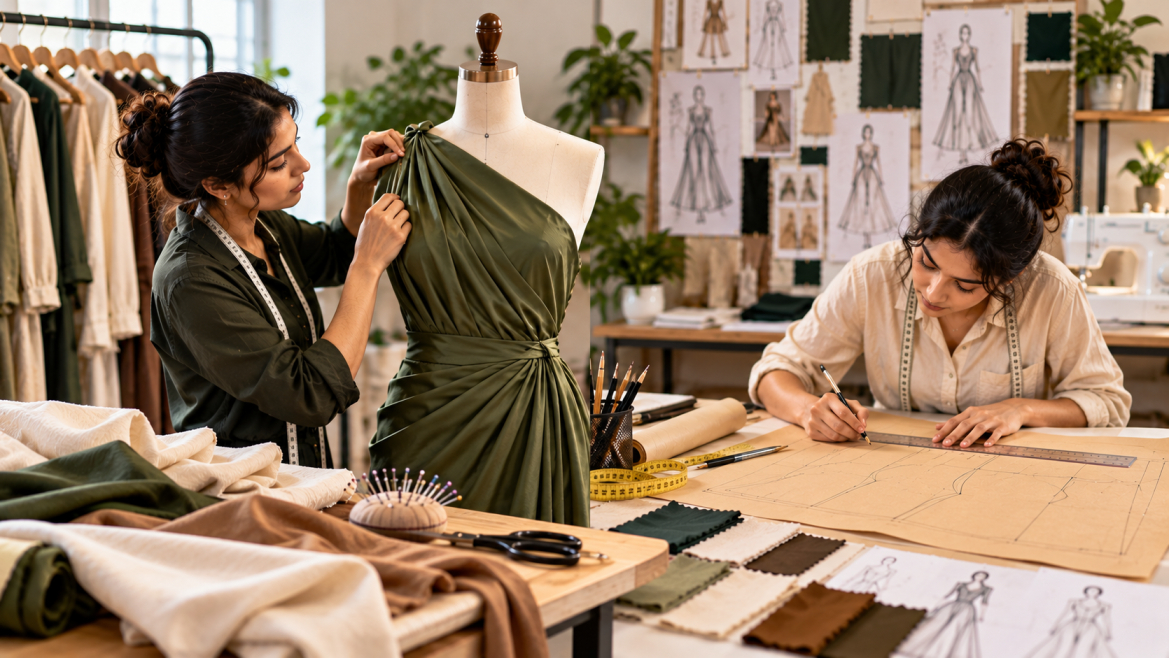
Draping is a technique in which fabric is arranged directly on a dress form or mannequin to develop the shape of a garment. Instead of drawing every pattern piece on paper first, the designer works with the fabric itself, adjusting folds, gathers, pleats and other details until the desired appearance is achieved.
Designers often begin with an inexpensive fabric such as muslin to test their ideas before using the final material. They pin the fabric to the dress form, mark important lines and make adjustments while observing how the material falls around the body.
This method is particularly useful when a design depends on fabric movement, soft folds or an unusual silhouette. Since the designer can see the garment taking shape in three dimensions, it becomes easier to experiment with creative details and refine the design.
Garments Suitable for Draping
Cowl-neck dresses: Draping helps create soft folds around the neckline by allowing the designer to adjust how the fabric falls.
Evening gowns: Flowing silhouettes, gathered sections and decorative folds can be developed by arranging fabric directly on a dress form.
Asymmetrical dresses: Designers can experiment with uneven necklines, diagonal lines and off-centre details while observing the overall shape.
Pleated and gathered outfits: Draping helps determine where folds should appear and how much fabric is needed to achieve the desired volume.
Creative couture garments: Unusual silhouettes and sculptural details can be explored through hands-on fabric manipulation.
Draping also helps designers understand fabric behaviour. Lightweight materials may create soft, flowing folds, while heavier fabrics can produce a more structured appearance.
What Is Pattern Making in Fashion Design?
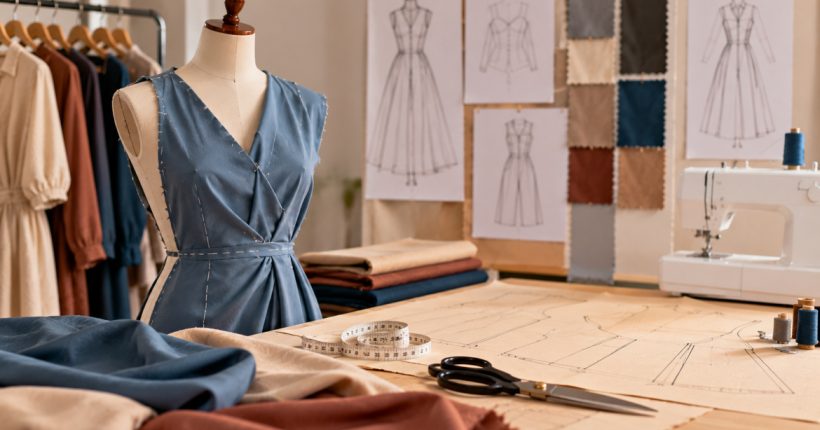
Pattern making is the process of creating templates that guide how fabric pieces should be cut and assembled into a garment. In flat pattern making, these templates are drafted on paper using body measurements, basic patterns, rulers and other drafting tools.
A pattern identifies the shape and size of each garment component, including the front, back, sleeves, collars and other sections. The designer must consider fit, seam allowances, construction details and the intended style.
Once the pattern is prepared, it can be used to cut fabric and create a sample garment. The sample is then checked for fit and appearance, and adjustments are made wherever necessary.
Pattern making is valuable when accurate measurements are important or when a design needs to be reproduced consistently. It also provides a foundation for developing different styles from an existing basic pattern.
Garments Suitable for Pattern Making
Shirts and blouses: Patterns help define the body shape, sleeves, collars, cuffs and button openings with greater precision.
Trousers and pants: Accurate drafting is important for the waist, hips, crotch, leg shape and overall fit.
Straight and A-line skirts: Flat patterns provide a practical starting point for developing the required shape, length and fit.
Structured jackets: Pattern making helps establish the proportions of panels, sleeves, collars, lapels and other construction details.
Uniforms and everyday clothing: Standardised patterns make it easier to produce similar garments in different sizes.
Pattern making is especially useful in commercial clothing production because patterns can be adjusted, documented and graded to create a range of sizes.
How Draping and Pattern Making Differ
The main difference between these techniques lies in how the garment design is developed. Draping begins with fabric placed on a dress form, allowing designers to observe its shape and movement directly. Pattern making usually begins with measurements and drafting on a flat surface.
Draping encourages visual experimentation and is helpful when working with complex folds, unusual silhouettes or flowing designs. Pattern making offers a structured approach to garment proportions, accurate measurements and repeatable construction.
The techniques are not competing methods. Each has its own purpose, and the most suitable option depends on the garment, the fabric, the required fit and the intended production process.
Which Technique Should You Use for Different Garments?
1. Dresses and Gowns
A basic shift dress or A-line dress can often be developed using pattern making. The designer drafts the garment pieces using measurements and adjusts them to achieve the required fit.
For a gown with a cowl neckline, dramatic folds or an asymmetrical skirt, draping may be more effective. It allows the designer to observe how the fabric falls and refine the silhouette before finalising the pattern.
Recommended approach: Pattern making for simpler silhouettes and draping for complex folds or flowing details. Both methods can be combined when a gown includes fitted and draped sections.
2. Shirts and Blouses
Shirts require careful planning of collars, sleeves, cuffs, button openings and seams. Pattern making helps define these components and maintain consistency during construction.
A blouse with a gathered neckline or a loose, flowing front may benefit from draping to achieve the intended appearance.
Recommended approach: Pattern making for the main structure, with draping for special folds and fabric arrangements when needed.
3. Trousers and Pants
Trousers depend heavily on body measurements and the relationship between the waist, hips, crotch and leg shape. Pattern making helps designers control these proportions and refine the fit.
Draping is not usually the first choice for conventional trousers, although it can be useful when experimenting with unusual shapes or exaggerated volume.
Recommended approach: Pattern making for most standard trouser designs.
4. Skirts
A straight skirt or a basic A-line skirt can be created using flat patterns. This approach helps designers control the waistline, hip fit, length and flare.
For skirts featuring cascading folds, uneven hemlines or dramatic fabric volume, draping can help establish how the material should fall.
Recommended approach: Pattern making for straightforward shapes and draping for elaborate silhouettes.
5. Jackets and Structured Garments
Blazers, tailored jackets and similar garments require carefully planned panels, shoulder shapes, sleeves, collars and construction details. Pattern making is particularly useful for developing these elements accurately.
Draping may be introduced when the designer wants to experiment with a different shoulder line, sculptural lapel or unconventional silhouette.
Recommended approach: Pattern making for the main structure, supported by draping for selected design features.
Can Draping and Pattern Making Be Used Together?
Yes. Combining both methods can be an effective way to develop garments that require precise construction as well as creative fabric shaping.
Consider an evening gown with a fitted bodice and a flowing, asymmetrical skirt. The designer could use pattern making to develop the bodice and establish its measurements. Draping could then be used to explore the skirt’s folds, volume and movement.
After achieving the desired shape, the designer can mark the draped fabric and transfer the necessary details into a pattern. The pattern pieces can then be refined and tested through sample construction before the final garment is made.
This combined approach helps designers balance technical accuracy with creative experimentation. It also shows why learning both techniques can be valuable for anyone interested in garment construction.
Essential Tools for Draping and Pattern Making
Each technique requires specific tools, although some equipment can be useful for both methods.
Tools Used for Draping
- Dress form or mannequin
- Muslin or suitable test fabric
- Draping pins
- Fabric scissors
- Measuring tape
- Fabric marker or tailor’s chalk
- Style tape for marking design lines
Tools Used for Pattern Making
- Pattern paper
- Measuring tape
- Straight and curved rulers
- Set square
- Pencil and eraser
- Pattern marking tools
- Fabric scissors and tailor’s chalk for cutting preparation
Learning to use these tools correctly helps designers develop accurate patterns, manage fabric efficiently and reduce unnecessary adjustments during garment construction.
What Should Beginners Learn First?
For beginners, learning basic measurements, garment construction and flat pattern drafting can provide a useful foundation. These skills help students understand garment proportions, seam placement, fit and how individual fabric pieces come together.
Once the fundamentals are clear, draping offers another way to explore design. Students can observe how fabric responds to pinning, folding and shaping, then compare the result with a pattern drafted on paper.
Regular practice is essential. Starting with a simple skirt or blouse, creating a sample, checking the fit and correcting mistakes can help build confidence. Gradually progressing to gowns, structured jackets and detailed designs allows learners to apply both techniques to more complex garments.
Develop Your Fashion Design Skills with Skill Haara
A strong foundation in fashion design requires creativity as well as technical knowledge. Understanding fabric behaviour, taking accurate measurements, drafting patterns and constructing garments can help aspiring designers turn their ideas into wearable pieces.
Skill Haara offers fashion design learning opportunities for individuals interested in developing practical skills and exploring career opportunities in the fashion industry. Those interested in pursuing fashion design can explore the available programs to identify an option that aligns with their interests and career goals.
Whether you want to work in garment design, develop your own clothing collections or explore boutique entrepreneurship, understanding both draping and pattern making can broaden your knowledge of the design process.
Final Thoughts
Draping and pattern making are complementary techniques that help fashion designers develop garments with the right shape, fit and appearance. Pattern making provides a structured method for planning garment pieces, while draping allows designers to explore fabric movement and three-dimensional forms.
The right technique depends on the design rather than a fixed rule. By learning both methods and practising them on different garments, aspiring fashion designers can develop the technical understanding and creative flexibility needed to bring their ideas to life.