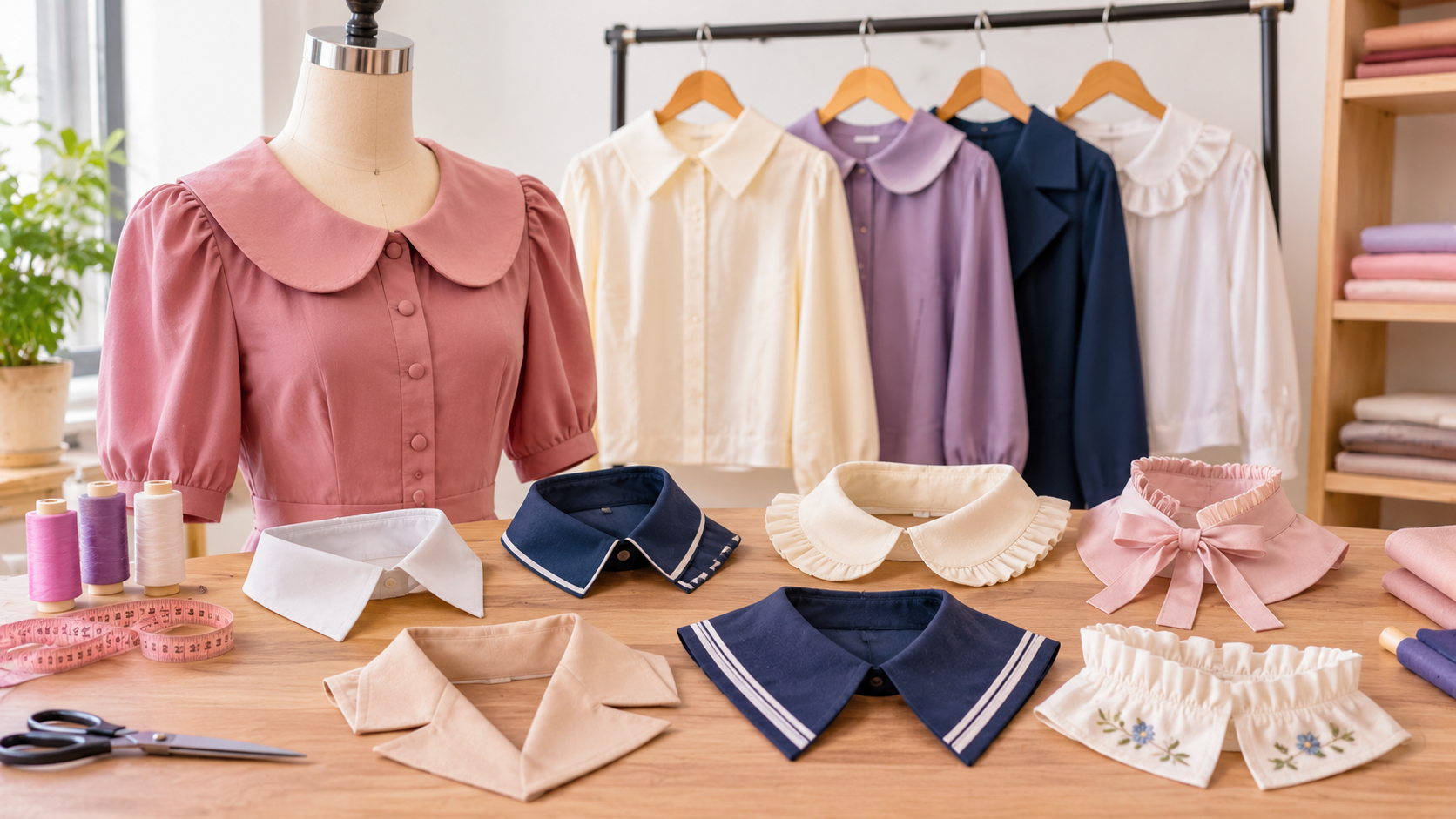
A collar may look like a small part of a garment, but it has a major influence on the overall appearance of an outfit. It can make a shirt look formal, give a dress a softer finish or add structure to a jacket. From simple round neck finishes to structured shirt collars, different collar styles help fashion designers create garments for different occasions and personal preferences.
Designing a collar involves more than selecting a shape. A designer needs to understand neckline measurements, pattern development, fabric properties, interfacing and stitching techniques. The collar must sit comfortably around the neck while maintaining its intended shape.
Whether you are learning garment construction or developing your own clothing designs, understanding different collar types is an important part of fashion design. This guide explains popular collar styles, their pattern drafting methods and the steps involved in constructing them.
1. Understanding the Basics of Collar Design
A collar is a garment component attached around the neckline. It can be designed as a separate fabric piece or developed as an extension of the garment itself.
The shape and construction of a collar depend on the garment design, neckline, fabric and desired finish. Some collars lie close to the neck, while others stand upright or extend away from the neckline.
Before drafting a collar pattern, designers should understand a few basic terms.
- Neckline: The opening around the neck of a garment where the collar is attached.
- Collar stand: The section that supports the collar and holds it around the neck.
- Collar fall: The visible portion of the collar that folds or extends away from the neckline.
- Under collar: The lower collar piece that sits closer to the garment.
- Upper collar: The outer collar layer, which is usually slightly larger to cover the seam neatly.
- Interfacing: An additional material used between fabric layers to provide support and maintain the collar’s shape.
Not every collar contains all these components. A flat collar, for example, does not require the same construction as a structured shirt collar.
2. Different Types of Collars in Fashion Design
Collars come in many shapes and construction styles. Understanding their differences helps designers select the right option for a particular garment.
A. Peter Pan Collar
The Peter Pan collar is a flat collar with rounded edges. It usually sits close to the neckline and has a soft, decorative appearance. It is commonly used in dresses, blouses and children’s clothing.
Pattern drafting method:
- Begin with the front and back bodice patterns.
- Mark the neckline accurately on both pieces.
- Trace the neckline onto a separate sheet of pattern paper.
- Draw the desired collar width from the neckline.
- Shape the outer edge with smooth, rounded curves.
- Join the front and back collar sections at the shoulder area.
- Add seam allowance before cutting the fabric.
Construction method:
Cut two sets of collar pieces, one for the upper collar and another for the lower collar. Place the pieces right sides together and stitch along the outer edge. Trim excess fabric around the curves and make small notches where necessary. Turn the collar right side out, press it carefully and attach it to the garment neckline.
B. Shirt Collar
The shirt collar is one of the most commonly used collar styles. It generally consists of a collar stand and a collar fall. This construction helps the collar maintain its shape around the neck.
It is widely used in formal shirts, casual shirts and some dresses.
Pattern drafting method:
- Measure the neckline of the completed bodice pattern.
- Draft the collar stand according to the required neck measurement and collar height.
- Mark the front opening and back neckline positions.
- Draft the collar fall above the stand.
- Shape the collar points according to the selected design.
- Add seam allowance to the collar and stand pieces.
Construction method:
Cut the upper collar, under collar and collar stand pieces. Apply interfacing to the appropriate pieces to provide support. Stitch the collar fall pieces together along their outer edges, trim the corners and turn them right side out. Insert the collar into the stand and stitch carefully. Finally, attach the completed collar stand to the neckline.
C. Mandarin Collar
A Mandarin collar is a short, upright collar that stands around the neckline without folding over. It creates a neat appearance and is commonly seen in shirts, kurtas, jackets and traditional clothing.
Pattern drafting method:
- Start with the garment’s neckline measurement.
- Trace the neckline onto pattern paper.
- Decide the required collar height.
- Draft a narrow collar band that follows the neckline curve.
- Add the required front opening and fastening allowance.
- Include seam allowance around the pattern edges.
Construction method:
Cut two collar pieces and apply interfacing to one of them if the fabric requires additional support. Place the pieces together with their right sides facing. Stitch along the top and short edges, then trim and turn the collar. Press it neatly and attach the lower edge to the garment neckline.
D. Peter Pan Variations and Flat Round Collars
Flat round collars are similar to Peter Pan collars but can have different widths and outer shapes. Some designs feature wider edges, decorative borders or contrasting fabric.
They are suitable for blouses, children’s dresses and casual outfits.
Pattern drafting method:
- Trace the front and back neckline.
- Decide how far the collar should extend over the garment.
- Draw the outer shape using a smooth curve.
- Check that both sides are balanced.
- Add seam allowance and mark the shoulder joining points.
Construction method:
Cut the upper and lower collar pieces, stitch them together along the outer edge and turn them carefully. Press the collar before attaching it to the neckline. Decorative piping or lace can be added during construction if the design requires it.
E. Sailor Collar
The sailor collar is a broad collar traditionally associated with naval uniforms. It usually has a distinctive back section with a square or pointed shape and a front neckline that can form a V-shaped opening.
It is also used in dresses, children’s outfits and contemporary fashion designs.
Pattern drafting method:
- Trace the garment’s front and back neckline.
- Mark the required collar width.
- Extend the pattern over the shoulder area.
- Draft the back section with a square or pointed outer shape.
- Shape the front sections to match the intended neckline.
- Check the front and back pattern pieces for proper alignment.
Construction method:
Cut the upper and lower collar pieces and apply interfacing if necessary. Stitch the outer edges together, trim the corners and turn the collar. Press the shape before positioning it on the garment. Attach it carefully around the neckline, ensuring the front and back sections meet evenly.
F. Shawl Collar
A shawl collar is a continuous collar that curves from the neckline and extends towards the front opening of a garment. It creates a soft, rounded lapel-like appearance.
This style is often used in coats, blazers, dresses and jackets.
Pattern drafting method:
- Begin with the front bodice or jacket pattern.
- Mark the neckline and front opening.
- Decide the desired width of the collar.
- Extend the front pattern to create the collar shape.
- Draw a smooth curve from the neckline towards the front edge.
- Draft the facing and undercollar pieces according to the design.
- Check the collar roll and seam lines before cutting.
Construction method:
Cut the collar and facing pieces, adding interfacing where required. Stitch the relevant sections together and carefully shape the curved edges. Press the seams and attach the collar to the garment. The final pressing stage is important because it helps the collar develop a smooth roll.
G. Notched Lapel Collar
A notched lapel is commonly found on blazers, formal jackets and coats. It has a distinctive notch where the collar and lapel meet.
This collar style requires careful pattern development because the front lapel, collar and neckline must align correctly.
Pattern drafting method:
- Start with a jacket front pattern.
- Mark the neckline, front opening and shoulder line.
- Decide the lapel width and collar width.
- Draw the lapel shape along the front opening.
- Create the notch at the point where the lapel meets the collar.
- Draft the collar and undercollar separately.
- Prepare the facing pattern and check the seam lines.
Construction method:
Apply suitable interfacing to the collar, lapel and facing sections. Join the collar and lapel components according to the pattern. Stitch the facing to the garment front, paying close attention to the notch and collar junction. Trim bulky seam allowances and press the finished lapel into shape.
H. Ruffle Collar
A ruffle collar contains gathered or pleated fabric around the neckline. It adds volume and decorative detail to a garment.
This collar style is commonly used in blouses, dresses and occasion wear.
Pattern drafting method:
- Measure the neckline where the ruffle will be attached.
- Decide the finished width and fullness of the ruffle.
- Calculate the required fabric length using the selected gathering ratio.
- Draft a rectangular or shaped strip according to the design.
- Mark the stitching and gathering lines.
- Add seam allowance to the pattern.
Construction method:
Cut the fabric strip and finish its outer edge using a suitable hemming method. Stitch gathering lines along the attachment edge. Pull the threads evenly until the ruffle matches the neckline measurement. Distribute the gathers and attach the collar to the garment.
I. Cowl Collar
A cowl collar features soft folds that fall naturally around the neckline. Its appearance depends on the fabric’s drape and the amount of extra material included in the pattern.
It is often used in dresses, tops and evening garments.
Pattern drafting method:
- Start with a basic bodice pattern.
- Mark the desired neckline depth and width.
- Draw slash lines from the neckline towards the shoulder or bust area.
- Cut along the lines and spread the pattern sections to create additional fabric.
- Redraw the neckline to create a smooth draped shape.
- Check the pattern balance and add seam allowance.
Construction method:
Choose a fabric with suitable drape, such as soft jersey, satin or lightweight crepe. Cut the pattern carefully, keeping the grainline in mind. Finish the neckline using a suitable facing or binding method. Avoid excessive stitching that may restrict the natural folds.
J. Bow Collar
A bow collar includes extended fabric pieces that can be tied into a bow at the front or back of the neck. It is a decorative style commonly used in formal blouses and dresses.
Pattern drafting method:
- Draft the basic neckline and collar attachment area.
- Decide where the bow will be positioned.
- Calculate the required length and width of the bow extensions.
- Draft the bow strips separately.
- Shape the ends according to the desired finish.
- Add seam allowance before cutting.
Construction method:
Cut the bow pieces and stitch them along the long edges, leaving an opening for turning. Trim the seam allowance, turn the pieces and press them flat. Attach the extensions to the neckline and check that both sides are equal in length.
3. How to Choose the Right Fabric for Collar Construction
Fabric selection can change how a collar looks and behaves. A structured collar needs enough support to maintain its shape, while a soft collar should allow natural folds and movement.
Consider these fabric options:
- Cotton: A useful choice for shirt collars, Mandarin collars and Peter Pan collars. It is easy to handle and generally holds its shape well.
- Poplin: Commonly used for formal and casual shirt collars because of its smooth surface and structure.
- Silk: Suitable for softer collar designs, including bow collars and decorative styles.
- Satin: Often used for occasion-wear collars and garments that require a smooth finish.
- Georgette: Suitable for lightweight ruffle collars and soft decorative details.
- Linen: Works well for relaxed collar styles, although its tendency to crease should be considered.
- Jersey: Suitable for soft, flexible neck finishes and selected cowl designs.
The fabric should match the intended collar shape. A very lightweight fabric may need interfacing to support a structured collar, while a heavy fabric may create unnecessary bulk.
4. The Importance of Interfacing in Collar Design
Interfacing is a supporting material placed between fabric layers or attached to the wrong side of a fabric piece. It helps collars maintain their shape and prevents them from looking limp or uneven.
Different collars require different levels of support.
For example, a formal shirt collar generally needs more structure than a soft ruffle collar. A Mandarin collar may require light or medium support depending on its height and fabric.
When selecting interfacing, consider:
- Fabric weight and thickness.
- The stiffness required in the finished collar.
- Whether the interfacing is sew-in or fusible.
- The care instructions of the garment.
- The possibility of shrinkage or bubbling after application.
Always test the interfacing on a small fabric sample before applying it to the final garment. This helps prevent unwanted changes in texture or appearance.
5. Common Mistakes to Avoid When Constructing Collars
Collar construction requires accurate measurements and careful stitching. Small mistakes can make the collar sit unevenly or affect the appearance of the entire garment.
Here are some common problems to watch out for.
Incorrect neckline measurement: If the collar pattern does not match the garment neckline, it may stretch, wrinkle or become difficult to attach.
Uneven collar points: Different point lengths can make a shirt collar look unbalanced. Check both sides of the pattern before cutting.
Excessive interfacing: Using interfacing that is too stiff can make the collar uncomfortable and difficult to shape.
Poor curve finishing: Rounded collars require careful trimming and notching. Without these steps, the finished edges may look bulky or uneven.
Incorrect grainline placement: Fabric cut in the wrong direction may stretch or distort, affecting the collar’s final shape.
Inaccurate seam allowance: Inconsistent seam allowance can change the finished collar size and cause alignment problems.
Rushed pressing: Pressing helps define the collar shape and creates cleaner edges. Skipping this step can affect the final finish.
Choosing unsuitable fabric: A fabric that is too heavy or too stiff may not work well for a soft collar design.
Making a sample collar before constructing the final garment is a useful way to check the pattern, fit and finishing.
6. Tips for Designing Unique Collar Styles
Fashion designers do not always need to follow traditional collar shapes. Small changes in width, length, curves and fabric combinations can create distinctive designs.
Here are a few ways to experiment:
- Combine contrasting fabrics for the upper and undercollar.
- Add piping around the edges of flat collars.
- Experiment with different collar widths.
- Use embroidery or decorative stitching for selected designs.
- Combine a simple neckline with an oversized collar.
- Add detachable collars to create different looks with one garment.
- Experiment with asymmetrical shapes for contemporary outfits.
While developing new designs, it is important to maintain comfort and ensure that the collar does not restrict neck movement.
7. Why Collar Construction Is an Important Fashion Design Skill
Understanding collar design helps aspiring designers develop better garment construction skills. It also improves their ability to work with different necklines, fabrics and garment styles.
Collar drafting and stitching are useful in several areas of clothing design, including:
- Formal shirts and office wear.
- Casual dresses and blouses.
- Traditional outfits and kurtas.
- Jackets, blazers and coats.
- Children’s clothing.
- Custom-designed garments.
Learning how to draft collars from basic patterns also makes it easier to modify existing designs and create original garment details.
8. Learn Practical Fashion Design Skills with Skill Haara
Fashion design involves creativity as well as technical knowledge. Understanding pattern drafting, fabric selection, measurements and garment construction helps learners turn design ideas into finished clothing.
Skill Haara offers fashion design training for individuals interested in developing practical knowledge of fashion and garment creation. Learning different construction techniques, including collar development, can help aspiring designers understand how individual garment components are designed and assembled.
For anyone interested in fashion design, practising different collar patterns and construction methods is a useful way to improve technical skills and build confidence in garment making.
Conclusion
Collars play an important role in defining the style and structure of a garment. From the simple Peter Pan collar to the structured notched lapel, each design requires a suitable drafting and construction method.
Understanding neckline measurements, pattern development, interfacing, fabric selection and stitching techniques helps designers create collars that look balanced and fit comfortably. Regular practice with different collar styles can improve garment construction skills and make it easier to develop original clothing designs.
For aspiring fashion designers, learning collar construction is a practical step towards understanding the technical side of garment design.