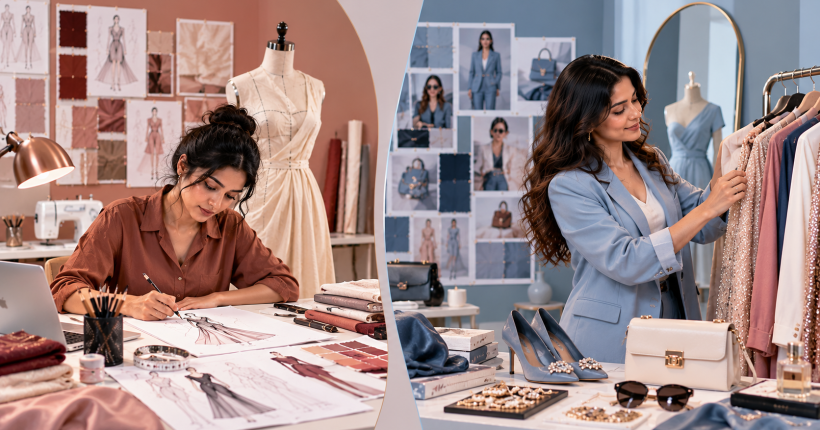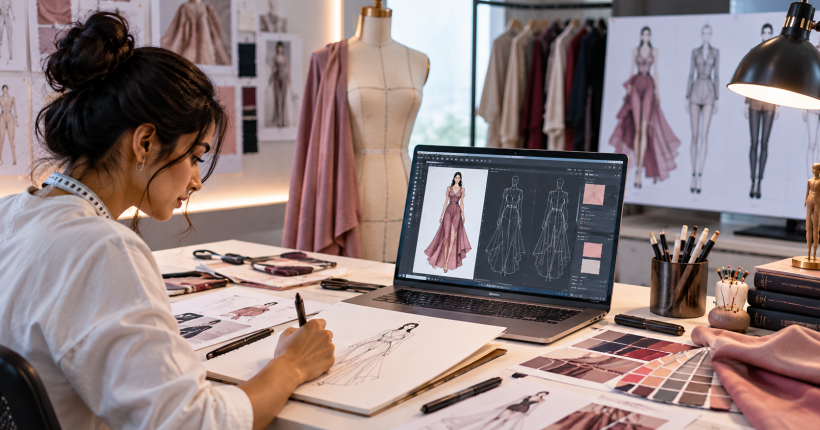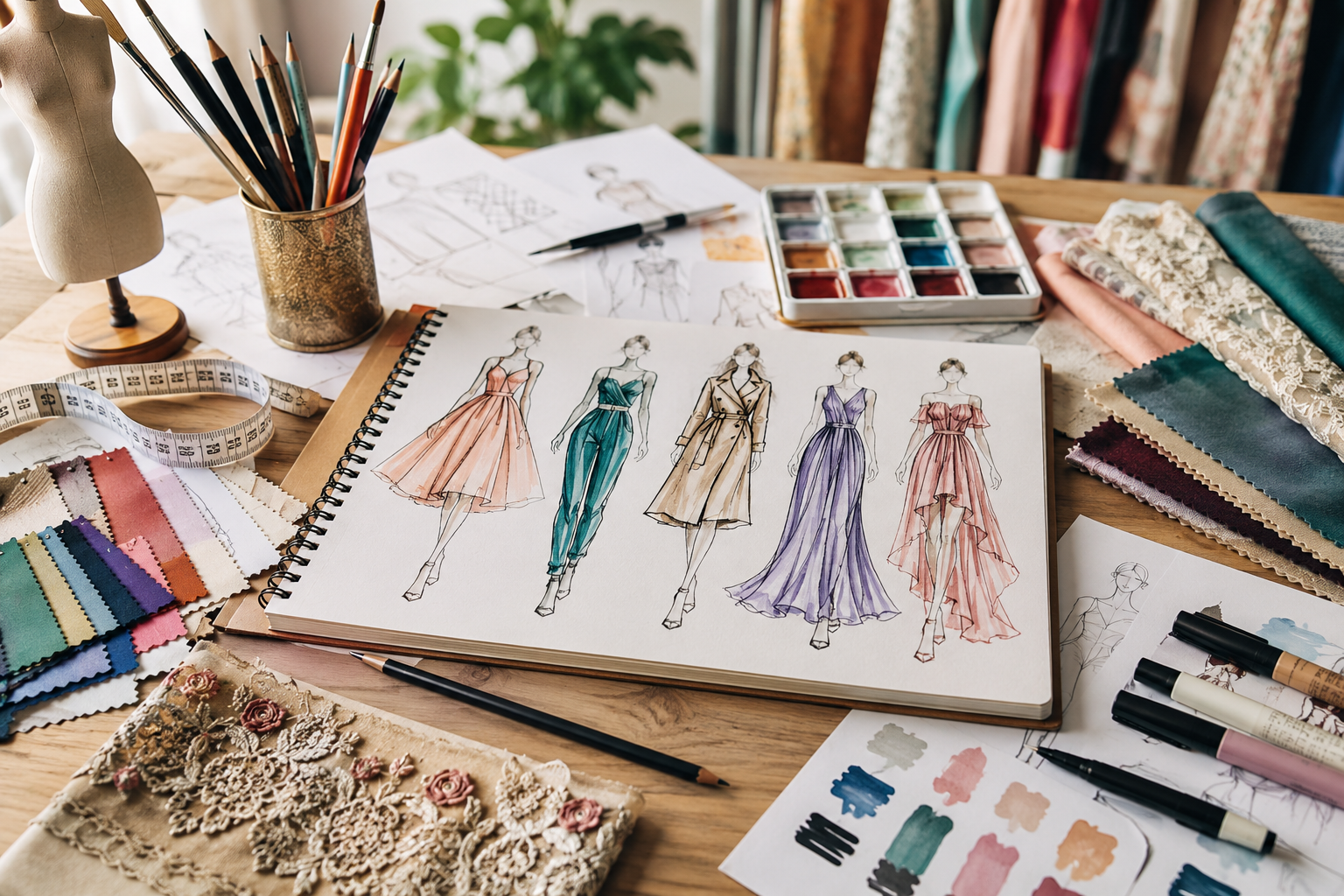
Fashion often begins with a simple idea. Before a garment is cut, stitched, or displayed on a runway, a designer usually needs a way to visualize what they have in mind. This is where fashion illustration becomes important.
Fashion illustration is more than drawing attractive figures or clothing. It helps designers communicate silhouettes, colours, fabrics, details, and styling ideas before turning a concept into an actual garment. With regular practice, basic sketching can develop into a practical skill that supports several areas of a fashion career.
For students planning to enter the fashion industry, learning illustration can therefore be a useful starting point. It builds visual thinking while introducing learners to the creative process behind fashion design.
What Is Fashion Illustration?
Fashion illustration is the process of visually representing clothing, accessories, styling ideas, and garment concepts. Designers use illustrations to communicate how a finished outfit might look before creating it.
A fashion illustration can range from a quick concept sketch to a detailed presentation showing fabric texture, colours, proportions, and garment construction details. The level of detail usually depends on the purpose of the illustration.
For beginners, the focus should not be on creating perfect drawings immediately. Understanding proportions, movement, silhouettes, and garment details is more important. These fundamentals gradually make sketches clearer and more useful for design development.
Why Is Fashion Illustration Important?
A designer may have a strong idea in mind, but communicating that idea visually can make the development process much easier. Sketching provides a visual reference that can be reviewed and modified before production begins.
Fashion illustrations can help designers:
- Develop and communicate design ideas
- Experiment with different silhouettes
- Explore colours and fabric combinations
- Plan garment details
- Present concepts to clients or teams
- Create material for a fashion portfolio
- Document ideas for future collections
Illustration also encourages designers to observe clothing more carefully. Details such as pleats, collars, sleeves, seams, drapes, and proportions become easier to understand when they are regularly studied through drawing.
Start With Basic Fashion Figure Proportions
One of the first things beginners encounter in fashion illustration is the fashion figure. Unlike ordinary figure drawing, fashion figures are often stylized to create an elongated appearance that allows garments to be displayed clearly.
Start by learning the basic structure of the body. Practise the head, shoulders, torso, hips, arms, and legs separately before attempting complicated poses.
You do not need to create highly detailed figures at the beginning. Focus on getting the overall proportions and posture right. Once you become comfortable with basic figures, you can experiment with different poses and movements.
Learn to Draw Garment Silhouettes
Once the figure becomes easier to sketch, the next step is understanding how clothing sits on the body.
A silhouette describes the overall shape and outline of a garment. A-line dresses, straight silhouettes, flared skirts, oversized jackets, fitted trousers, and layered outfits all create different visual effects.
Practising different silhouettes helps aspiring designers understand how clothing changes the appearance of the body. It also makes it easier to experiment with new design ideas.
Instead of trying to draw an entire outfit in detail every time, beginners can practise individual garment categories such as:
- Tops and shirts
- Trousers
- Skirts
- Dresses
- Jackets
- Coats
- Traditional garments
- Bridal wear
This approach makes practice more manageable and helps build confidence gradually.
Understand Fabric and Clothing Folds
A garment does not appear flat when it is worn. Fabric bends, gathers, stretches, and falls differently depending on its material and construction.
Learning to represent these characteristics can make fashion illustrations look more realistic. Beginners can start by observing simple fabrics and studying how they behave when hanging, folded, gathered, or wrapped around the body.
For example, a lightweight fabric may create soft and flowing folds, while a structured fabric can maintain a more defined shape. Understanding these differences helps designers communicate their ideas more effectively through illustrations.
Add Colour and Texture to Your Sketches
Once the basic drawing is comfortable, colour can be introduced. Colour helps communicate the mood and visual direction of a design.
Beginners can experiment with coloured pencils, markers, watercolours, or digital tools. The aim is not simply to fill the garment with colour. It is to understand how colour combinations influence the overall appearance of an outfit.
Texture can also be represented through different drawing techniques. Denim, silk, wool, lace, leather, embroidery, and other materials have distinctive visual qualities. Learning to suggest these qualities can make an illustration more informative.
Explore Fashion Details
Small details can significantly change a garment. A basic dress, for example, can become completely different through changes to its neckline, sleeves, waistline, embellishments, or hemline.
Fashion illustration gives students a way to experiment with these details before creating the actual garment.
Try sketching variations of:
- Necklines
- Sleeves
- Cuffs
- Collars
- Pockets
- Pleats
- Ruffles
- Embroidery
- Prints
- Decorative elements
This type of practice develops observation and design thinking at the same time.
From Hand Sketches to Digital Fashion Illustration
Traditional sketching remains useful, but digital tools have also become part of modern fashion design workflows. Fashion CAD and digital illustration software can help designers refine concepts, experiment with colours, and prepare professional presentations.
Beginners do not necessarily need to start with advanced software. Building confidence with hand-drawn sketches first can make it easier to understand digital design later.
A good learning progression can look like this:
Basic drawing → Fashion figures → Garment silhouettes → Fabric and details → Colour → Digital illustration → Portfolio projects
The exact process can differ from one learner to another, but consistent practice is more important than trying to master everything at once.
How Fashion Illustration Can Support a Career
Fashion illustration is rarely an isolated skill. It can support several areas of fashion education and professional work.
Designers use sketches to develop collections and communicate concepts. Stylists can use visual references when planning complete looks. Fashion entrepreneurs can use illustrations while developing product ideas. Students can also use their best illustrations as part of a professional portfolio.
Depending on their broader skills and interests, fashion learners can explore roles such as:
- Fashion Designer
- Fashion Illustrator
- Apparel Designer
- Fashion Stylist
- Costume Designer
- Fashion CAD Designer
- Boutique Entrepreneur
- Fashion Merchandiser
Building illustration skills does not automatically qualify someone for these roles, but it can become an important part of a wider fashion skill set.
Learning Fashion Designing at SkillHaara
Fashion illustration becomes more valuable when it is learned alongside other essential fashion skills. At SkillHaara, the Fashion Designing department combines creative learning with practical exposure across areas such as garment design, textiles, CAD, and fashion business. The academy’s broader learning approach includes practical projects, industry-relevant tools, portfolio development, and career support.
For learners interested in developing fashion skills systematically, SkillHaara offers fashion-focused programs through its Fashion Academy. Depending on the program, students can develop knowledge across design and apparel-related areas while gaining practical exposure.
SkillHaara provides learning options across Trivandrum, Aluva, and Thrissur, with course availability varying by location. If you are searching for the top fashion design program in Trivandrum, Aluva and Thrissur, SkillHaara can be explored as a structured option for developing creative and technical fashion skills.
Final Thoughts
Fashion illustration is a skill that starts with simple lines but can become an important part of professional design work. You do not need to be an expert artist to begin. What matters most is learning the fundamentals, observing clothing carefully, and practising consistently.
As your sketches improve, you can gradually explore garment construction, textiles, styling, Fashion CAD, and portfolio development. Combining these skills can give you a stronger foundation for exploring different opportunities within the fashion industry.
For aspiring fashion designers, the first sketch may be small, but it can be the beginning of a much bigger creative journey.