Aari embroidery has a distinctive place in Indian fashion, especially in bridal and occasion wear. Its detailed threadwork, raised textures, beads, stones, and decorative patterns can turn a simple garment into an elaborate piece of clothing.
What makes Aari work interesting today is that it sits between traditional craftsmanship and modern fashion. Designers, boutique owners, bridal-wear creators, and independent artisans continue to use embroidery techniques while experimenting with contemporary patterns and materials.
For someone interested in fashion, learning Aari embroidery can be more than a creative hobby. With the right technical skills and practice, it can become a specialised skill that supports freelance work, boutique projects, custom orders, or a broader career in fashion.
What Is Aari Embroidery?
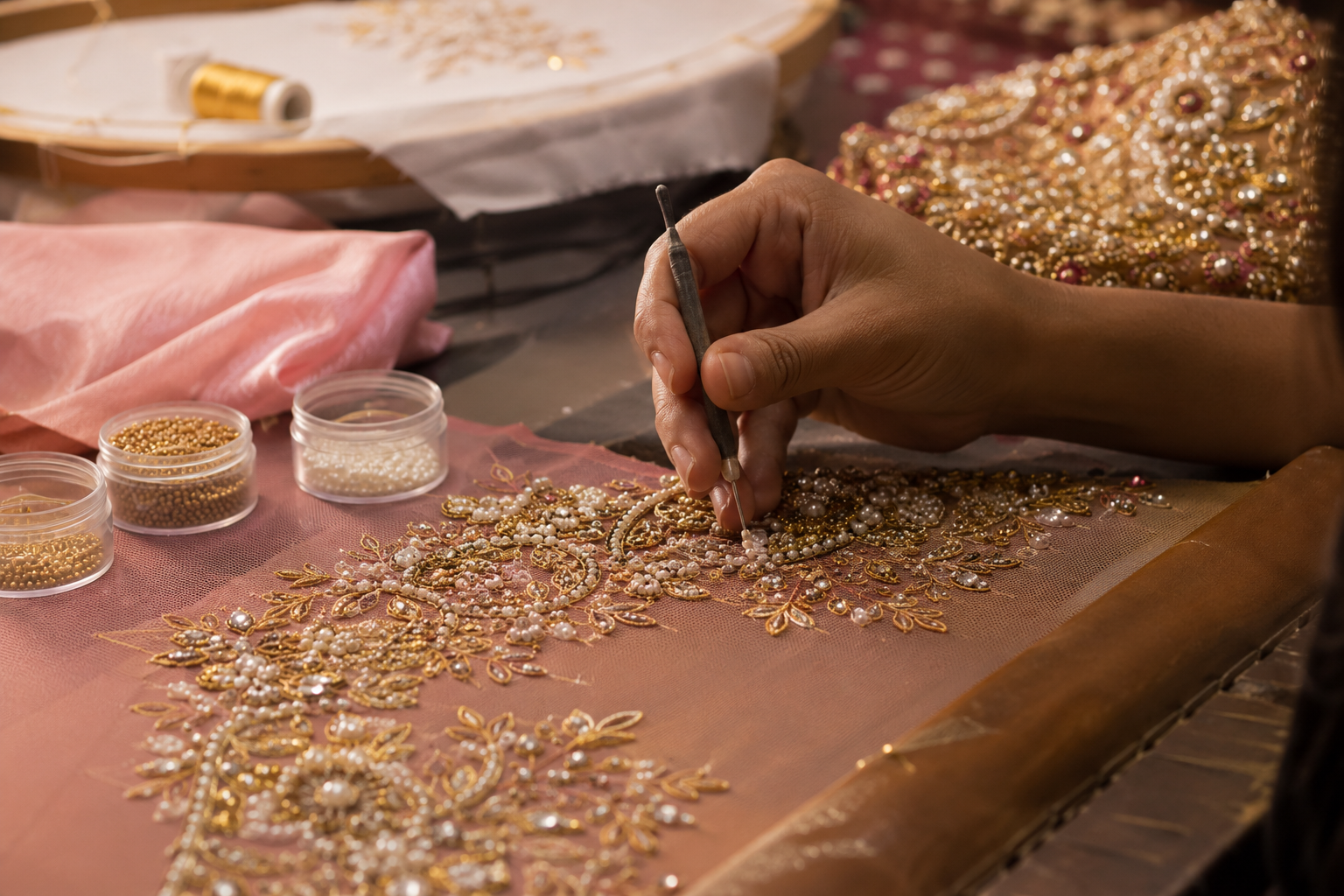
Aari embroidery is a form of hand embroidery traditionally created using a hooked needle known as an Aari needle. The technique allows the embroiderer to create continuous stitches on fabric with controlled movements.
Unlike basic hand embroidery, Aari work can involve several elements within the same design. Depending on the garment and desired finish, artisans may work with threads, beads, sequins, stones, Zardosi elements, and other decorative materials.
The technique is especially popular for embellishing saree blouses, bridal lehengas, wedding gowns, ethnic wear, sleeves, necklines, and other occasion garments.
The quality of the finished work depends heavily on precision. Stitch consistency, spacing, tension, material placement, and finishing all affect how professional the embroidery looks.
Why Is Aari Work Important in Fashion?
Fashion trends change constantly, but detailed surface embellishment continues to have a strong place in occasion wear.
Aari embroidery allows designers to customise garments rather than relying entirely on ready-made patterns. A designer can create a specific neckline, sleeve motif, border, floral arrangement, or bridal pattern based on the garment and customer’s preferences.
It also adds another layer of creative expression to fashion design.
For aspiring designers, understanding embroidery can therefore complement skills such as garment construction, pattern making, styling, and fabric selection.
Essential Skills for Aari Embroidery
Learning Aari embroidery isn’t simply about knowing how to hold the needle. Several practical skills determine the quality of the final design.
1. Understanding Basic Aari Stitches
A strong foundation begins with learning different stitch techniques. SkillHaara’s specialist Aari program specifically includes 40+ Aari stitches, giving learners exposure to a broad range of embroidery methods.
Understanding how and where to use different stitches allows an embroiderer to create variations in texture and detail instead of producing repetitive patterns.
2. Design and Pattern Placement
A good embroidery design needs to work with the shape of the garment.
A motif that looks attractive on paper may not look right when placed on a curved neckline or sleeve. Learning how to position patterns, balance empty spaces, and adapt designs to garment measurements is an important part of professional embroidery work.
3. Thread and Material Handling
Different threads and decorative materials create different finishes.
Embroidery artists need to understand how materials behave on various fabrics and how much tension should be applied during stitching. This helps prevent uneven patterns, loose threads, or excessive distortion.
4. Neckline and Sleeve Design
Necklines and sleeves are among the most visible areas of a garment, particularly in bridal and festive clothing.
SkillHaara‘s Aari and embroidery training includes neckline design variations and sleeve design techniques, along with measurements and drafting.
These skills can help learners move beyond basic embroidery and create designs that work specifically with garment construction.
5. Decorative Embellishment
Aari work can be combined with different embellishment techniques to create richer designs.
Beads, stones, sequins, Zardosi work, and other decorative elements can be incorporated depending on the garment.
Where Is Aari Embroidery Commonly Used?
Aari embroidery is particularly suited to garments where detailed surface decoration is important.
Some common applications include:
- Bridal blouse designs
- Wedding lehengas
- Saree blouses
- Bridal gowns
- Festive ethnic wear
- Designer sleeves
- Neckline embellishments
- Dupattas and borders
- Custom boutique garments
- Couture and occasion wear
The level of detail can be adjusted depending on the fabric, garment style, budget, and customer’s requirements.
Aari Embroidery and Modern Fashion
Traditional embroidery doesn’t have to remain limited to traditional clothing.
Modern designers are experimenting with simpler motifs, geometric patterns, contemporary colour combinations, and minimal embellishments. Aari techniques can also be combined with modern garment silhouettes to create designs that feel less conventional.
This is where fashion education becomes useful. Understanding the relationship between embroidery, fabric, construction, colour, and overall styling helps designers use Aari work more thoughtfully.
Aari embroidery can be a specialised skill within a wider fashion education rather than a completely separate creative activity.
Career Opportunities After Learning Aari Embroidery
Aari embroidery can support several career and business directions depending on the learner’s skill level and experience.
Aari Embroidery Artist
You can work on embroidery projects for boutiques, designers, bridal-wear businesses, and individual customers.
Bridal Wear Specialist
Bridal garments often require detailed custom embellishment. Developing strong Aari skills can help you specialise in bridal blouse and wedding-wear embroidery.
Freelance Embroidery Professional
Freelancing allows skilled embroiderers to accept custom orders and collaborate with designers or boutiques without working for a single organisation.
Boutique Entrepreneur
Aari embroidery can become one of the services offered by a boutique. Combining embroidery with tailoring, styling, and garment design can create a broader business model.
Fashion Designer
For learners who develop Aari skills alongside pattern making, garment construction, fashion illustration, and other design abilities, embroidery can become part of a wider fashion design career.
Custom Garment Designer
Customers increasingly look for personalised clothing for weddings, celebrations, and special occasions. Embroidery skills can help designers create garments tailored to individual preferences.
Can Beginners Learn Aari Embroidery?
Yes. Aari embroidery can be learned progressively, starting with basic stitches and gradually moving into more detailed designs.
You don’t need to begin with complex bridal patterns. Building hand control, learning stitch techniques, practising on fabric samples, and gradually working on complete designs can produce better results.
Consistent practice matters more than trying to master everything at once.
A structured course can also be useful because learners receive demonstrations, feedback, and a planned sequence of techniques instead of having to figure out every stage independently.
Choosing Aari Embroidery Training
If you’re searching for Aari training in Trivandrum, look beyond the course title and check what you will actually learn.
A useful program should give you exposure to different stitches, design development, measurements, drafting, neckline and sleeve work, embellishment techniques, and practical projects.
It is also worth checking whether the training is suitable for beginners and whether you can practise techniques under mentor guidance.
For someone who wants to turn embroidery into a professional skill, practical learning is far more valuable than simply completing a certificate.
Learn Aari Embroidery at SkillHaara Fashion Academy
For learners exploring fashion designing courses, SkillHaara Fashion Academy offers fashion education that combines creative development with practical technical training. Its fashion programs cover areas such as fashion illustration, pattern making, draping, garment construction, embroidery, Fashion CAD, portfolio development, and fashion business.
SkillHaara also offers a Specialist in Aari Design & Embroidery program focused specifically on traditional embroidery skills. The course includes 40+ Aari stitches, neckline design variations, sleeve techniques, measurements and drafting, Zardosi work, and decorative surface embellishment.
The academy provides fashion training through centres in Trivandrum, Thrissur, and Aluva, with online and offline learning options available depending on the program. Its broader fashion training approach includes practical studio sessions, industry exposure, portfolio development, internships, and career guidance.
For someone interested in combining traditional embroidery with modern fashion skills, this kind of broader learning can provide more options than studying embroidery in isolation.
Final Thoughts
Aari embroidery is a detailed craft that rewards patience, precision, and creativity. While it has strong roots in traditional and bridal fashion, the technique can also be adapted to contemporary garments and modern design concepts.
Learning the right stitches is only the beginning. Understanding design placement, garment structure, materials, embellishment, and finishing can help turn basic embroidery knowledge into a professional skill.
If you’re considering Aari embroidery, as a broader career path, choosing practical training can give you a stronger foundation for developing your creative and technical abilities.