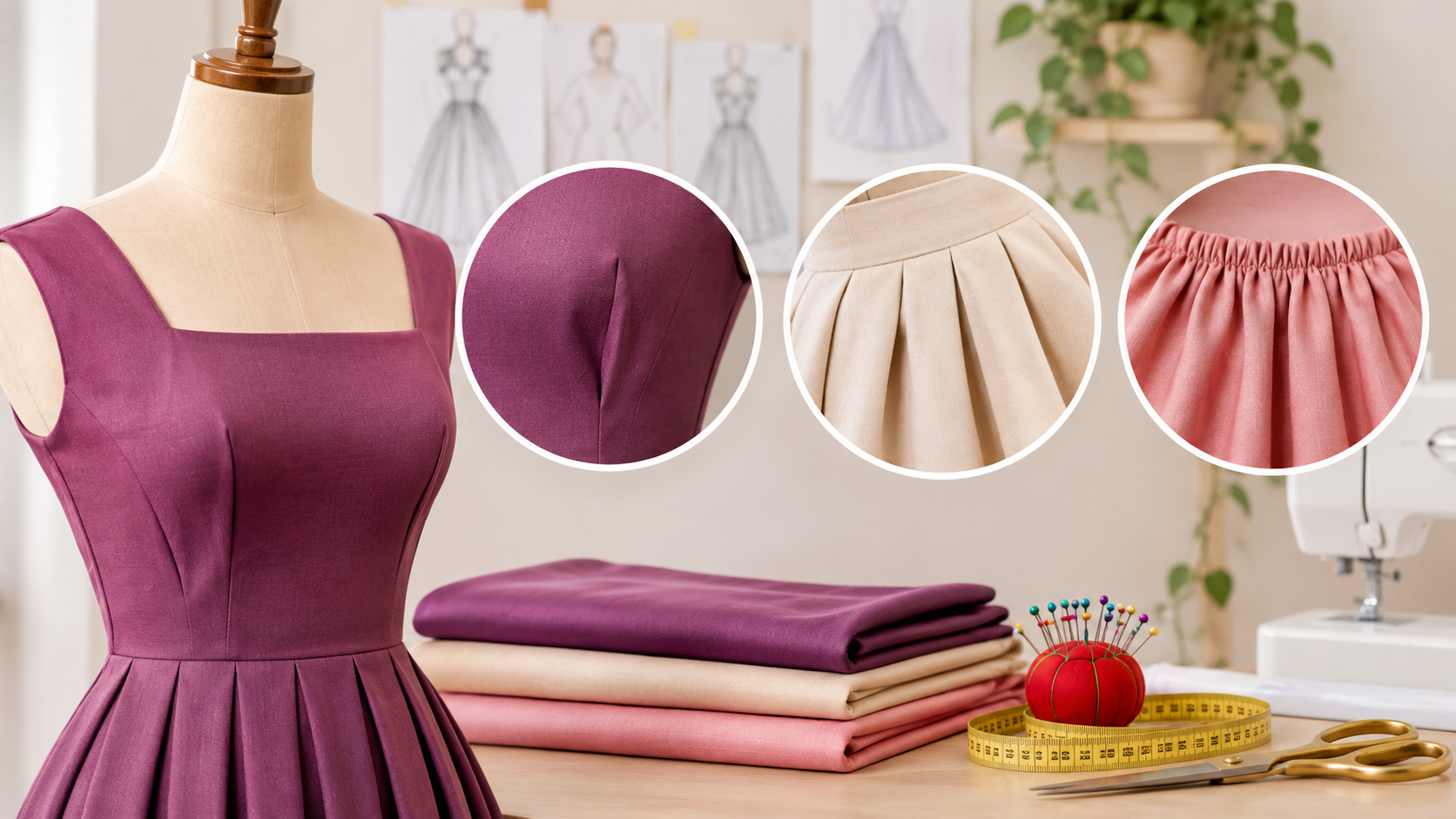
The shape and appearance of a garment depend on more than its fabric, colour and overall design. Small construction details can change how clothing fits the body, creates volume and moves when worn. Darts, pleats and gathers are three important techniques used in garment making to control fabric and develop different styles.
Although these techniques may sometimes appear similar, each serves a different purpose. Darts help shape fabric around the body, pleats organise excess material into folds, and gathers create fullness by bringing fabric together. Understanding how they work helps fashion designers make better decisions when developing dresses, skirts, blouses and other garments.
What Are Darts in Fashion Design?
Darts are stitched folds that help shape flat fabric around the natural curves of the body. They remove excess material from selected areas, allowing a garment to follow the body’s proportions more closely.
Darts are commonly used around the bust, waist, shoulders and back. Their position and length depend on the garment pattern and the amount of shaping required.
For example, a blouse may include bust darts to provide enough room around the chest while maintaining a fitted appearance. Waist darts can help create a more defined shape in dresses, skirts and fitted tops.
Common Types of Darts
Bust Darts: These are generally placed near the bust area to provide shaping and improve the fit of the garment.
Waist Darts: Used to reduce excess fabric around the waist, these darts create a closer fit in dresses, skirts and blouses.
Shoulder Darts: These help adjust the fabric around the shoulder and upper back, depending on the garment pattern.
Double-Pointed Darts: Also called fish-eye darts, these have points at both ends and are commonly used to shape the waist area of dresses and fitted garments.
How Darts Improve Garment Fitting
Darts are particularly useful when designing clothing that needs to follow body contours. Without proper shaping, excess fabric may create unwanted folds or cause a garment to hang loosely.
The placement of a dart affects the final silhouette. Designers must consider body measurements, fabric behaviour and the intended fit before adding darts to a pattern. Accurate stitching is equally important because uneven darts can affect the garment’s appearance.
What Are Pleats in Clothing Design?
Pleats are folds created by doubling fabric over itself and securing the folds through stitching, pressing or other construction methods. They are used to introduce structure, volume and decorative detail into garments.
Unlike darts, which primarily remove excess fabric to shape a garment, pleats organise extra fabric into visible folds. Depending on their depth, direction and placement, pleats can create anything from a neat structured appearance to a fuller silhouette.
Pleats are frequently found in skirts, trousers, dresses, shirts and traditional clothing.
Different Types of Pleats
Knife Pleats: These are narrow folds arranged in the same direction. They create a neat appearance and are commonly used in skirts and school uniforms.
Box Pleats: Box pleats consist of two folds that face away from each other, creating a wider, structured fold. They are often used in skirts and dresses.
Inverted Pleats: These are formed by bringing two folds towards the centre, producing a clean appearance on the outer surface. They are used in skirts, dresses and selected shirt designs.
Accordion Pleats: These contain multiple narrow folds that resemble an accordion. They are often used in lightweight skirts and dresses that require movement.
Sunray Pleats: These pleats gradually change in width, creating a radiating effect. They are commonly seen in flowing skirts and dresses.
Where Are Pleats Used?
Pleats can serve both functional and decorative purposes. In skirts, they provide additional room for movement while maintaining a defined waistline. In trousers, selected pleat styles create extra space around the hip and upper leg area.
Designers also use pleats in dresses and sleeves to introduce volume without changing the entire garment structure. Fabric choice is important because lightweight materials create softer folds, while thicker fabrics produce more defined shapes.
What Are Gathers in Garment Construction?
Gathers are small folds formed by drawing a longer piece of fabric along a shorter section. This is usually done by stitching one or more rows of temporary stitches and pulling the thread until the fabric reaches the required length.
Gathers create fullness and a soft, flowing appearance. They are commonly used in skirts, sleeves, necklines, waistlines and decorative fabric panels.
For example, a gathered skirt has more fabric around its lower section than the waistband. The extra material is distributed into small folds to create volume.
Common Applications of Gathers
Gathered Waistlines: Fabric is drawn together around the waist to create fullness in dresses and skirts.
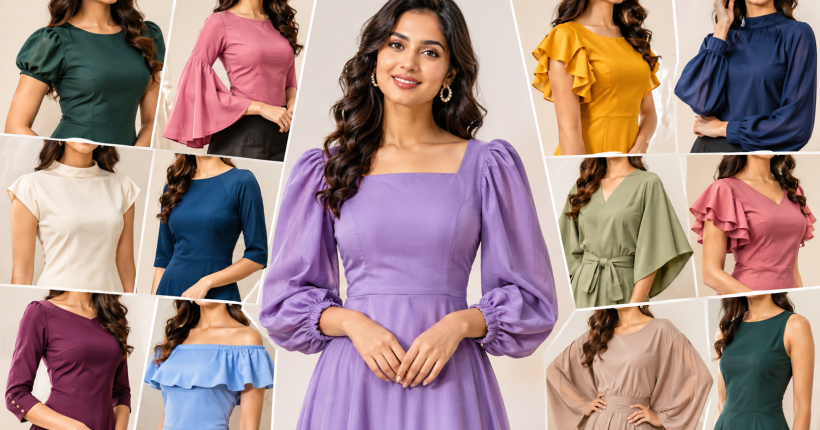
Puff Sleeves: Gathers around the sleeve cap or cuff create a rounded appearance and add volume.
Ruffled Edges: Fabric is gathered along one edge to produce decorative ruffles for dresses, tops and children’s clothing.
Gathered Necklines: Extra fabric is brought together around the neckline to create a soft, relaxed shape.
Tiered Skirts: Separate gathered fabric sections are joined together to create layers with varying amounts of fullness.
Techniques Used to Create Gathers
One common method involves sewing two parallel rows of long stitches along the fabric edge. The thread ends are then pulled carefully to distribute the fabric into small folds.
For thicker materials, gathering may require stronger thread or specialised machine settings. The folds should be distributed evenly to prevent bunching in one area.
Designers must also consider the fabric’s weight and thickness. Lightweight fabrics usually create softer gathers, while heavier materials may produce more pronounced volume.
Darts vs Pleats vs Gathers: Understanding the Differences
Darts, pleats and gathers serve different purposes in garment construction, even though all three involve working with excess fabric.
Darts are mainly used to shape clothing around the body’s natural curves. They help create a closer fit in areas such as the bust, waist and shoulders.
Pleats are created by folding fabric in a planned direction. They add structure, volume and movement to garments such as skirts, trousers and dresses.
Gathers are formed by drawing a longer piece of fabric into a shorter section. This creates soft folds and additional fullness, commonly seen in puff sleeves, gathered skirts and decorative necklines.
The main difference lies in the final result. Darts improve garment fitting, pleats create organised folds, and gathers produce a softer, fuller appearance. Understanding these techniques helps designers select the right construction method for different clothing styles.
Choosing the Right Technique for Different Garments
The selection of darts, pleats or gathers depends on the design objective and the garment’s construction requirements.
- Blouses: Bust and waist darts help create a fitted shape. Gathers may be used around sleeves or selected neckline designs.
- Skirts: Pleats create structured folds, while gathers provide a softer and fuller appearance.
- Dresses: Darts can improve the fit around the bodice, while pleats and gathers introduce volume in the skirt.
- Trousers: Front pleats can provide additional room around the waist and hip area.
- Sleeves: Gathers and pleats can create different sleeve shapes, from subtle fullness to more pronounced volume.
Designers should also consider the fabric before choosing a technique. A stiff material may hold pleats well, while a lightweight fabric can be more suitable for soft gathers. The garment’s intended silhouette should guide the final decision.
Common Mistakes to Avoid
Even a simple fabric manipulation technique requires accuracy. Some common mistakes can affect the appearance and fit of the finished garment.
- Incorrect dart placement: A poorly positioned dart may create unwanted creases or affect the garment’s shape.
- Uneven pleats: Inconsistent fold widths can make a garment look unbalanced.
- Uneven gathering: Concentrating all the fullness in one area can produce an irregular finish.
- Ignoring fabric properties: Some fabrics may not hold folds properly or may become bulky when gathered.
- Incorrect measurements: Errors during pattern preparation can affect the amount of fabric required for each technique.
- Poor stitching and pressing: Loose stitches and careless pressing can reduce the quality of the finished garment.
Practising these techniques on sample fabric before working on the final garment can help designers identify mistakes and improve their construction skills.
Developing Practical Garment Construction Skills
Understanding darts, pleats and gathers helps aspiring designers learn how fabric can be shaped and controlled during garment construction. These techniques are useful when creating fitted blouses, structured skirts, flowing dresses and different sleeve styles.
Skill Haara offers fashion design training that covers subjects such as fashion illustration, textile studies, pattern making, draping and garment construction. These learning areas introduce students to the creative and practical processes involved in developing clothing designs.
For those interested in fashion design, understanding fabric manipulation and garment construction techniques provides a useful foundation for creating different clothing styles.
Conclusion
Darts, pleats and gathers are essential techniques used to shape fabric and develop different garment styles. Darts help achieve a closer fit, pleats create organised folds, and gathers introduce fullness through controlled fabric distribution.
Knowing when and how to use each technique allows designers to make better decisions during pattern development and garment construction. With accurate measurements and regular practice, these methods can be applied to a wide range of clothing designs.