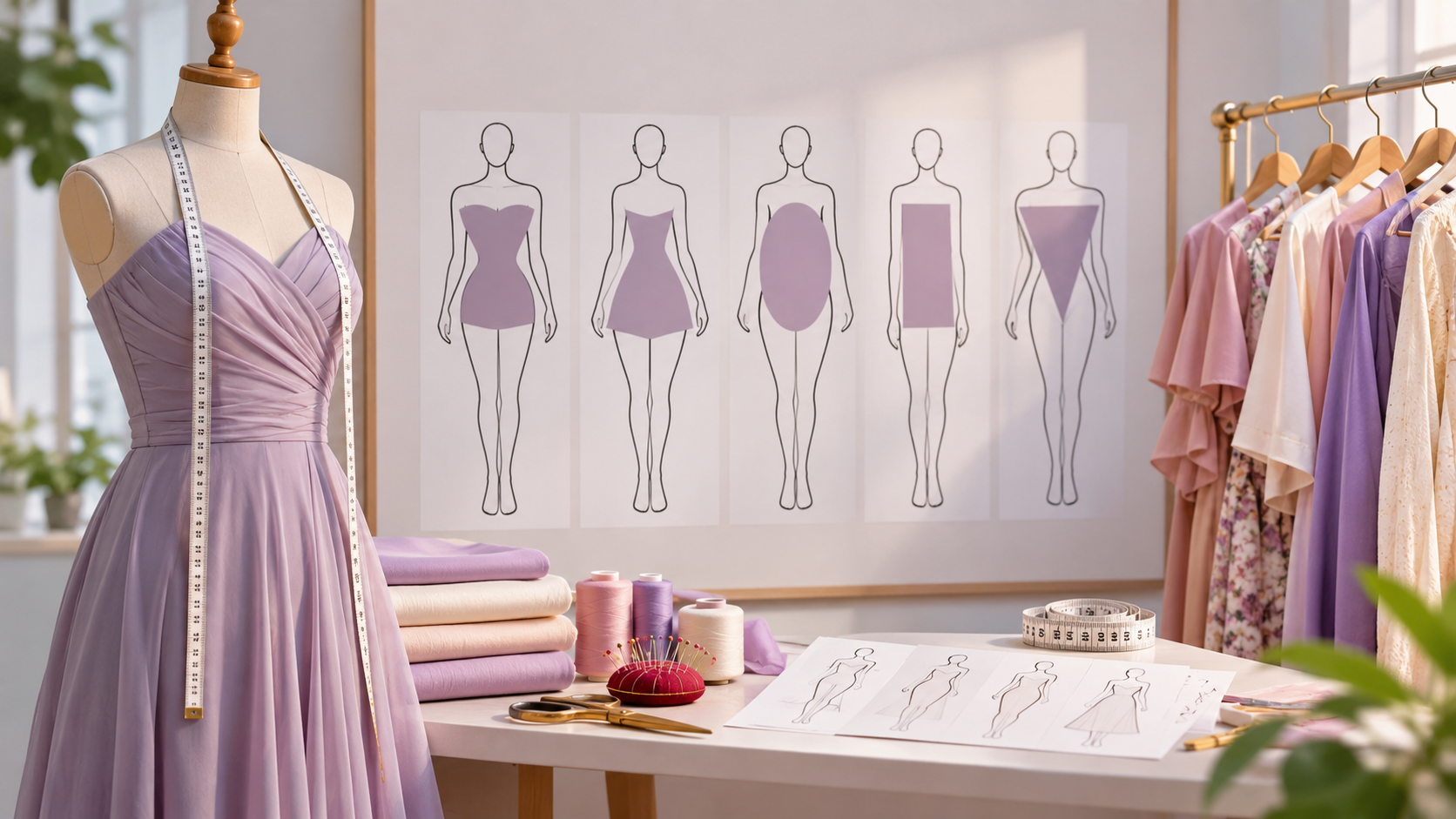
Creating clothing that fits well involves more than choosing an attractive design or following the latest fashion trends. Every individual has different body proportions, measurements and fitting preferences. A garment that looks comfortable and well-balanced on one person may require adjustments to suit someone else.
For fashion designers, understanding body shapes is an important part of developing customised clothing. It helps them make informed decisions about garment silhouettes, fabric selection, pattern adjustments and construction techniques. Rather than following fixed rules, designers should focus on creating clothes that suit the wearer’s measurements, comfort and personal style.
Whether designing everyday outfits, formal wear or occasion clothing, understanding body proportions can help produce garments that look balanced and feel comfortable.
Understanding Different Body Shapes and Their Proportions
Body shape describes how proportions are distributed across different areas of the body, including the shoulders, bust, waist and hips. In fashion design, understanding these proportions helps designers select suitable garment styles and create clothing that fits comfortably.
Common body shape categories include hourglass, pear, apple, rectangle and inverted triangle. Each category represents a general combination of body proportions and can serve as a reference when planning garment designs.
Not everyone fits perfectly into one category. Some individuals may have characteristics of multiple body shapes, and their proportions can change over time. Therefore, fashion designers should prioritise accurate body measurements and individual fitting requirements rather than relying only on body shape categories.
Common Body Shapes and Their Characteristics
Understanding common body shape categories can help fashion designers explore different garment styles and fitting approaches.
1. Hourglass Body Shape
An hourglass body shape generally features shoulders and hips with similar widths, along with a more defined waist. The upper and lower portions of the body appear relatively balanced.
For this shape, designers can experiment with garments that follow the natural waistline. Wrap dresses, fitted tops, waist-defined dresses and tailored garments are some possible design choices.
When creating customised clothing, the waist measurement should receive particular attention. Proper shaping through darts, seams and pattern adjustments can help achieve a comfortable fit without making the garment unnecessarily tight.
2. Pear Body Shape
A pear-shaped body generally has hips that are wider than the shoulders, with a comparatively narrower upper body. The waist may also be clearly defined.
Designers can experiment with different garment proportions depending on the wearer’s preferences. A-line skirts, structured tops and dresses with carefully planned upper-body details are possible options.
The most important consideration is ensuring that the garment fits comfortably around the hips and waist. Additional fabric allowance may be required in the lower portion of a garment, depending on the measurements and design.
3. Apple Body Shape
An apple-shaped body generally carries more fullness around the midsection, with comparatively slimmer hips or legs. Shoulder and bust proportions can vary from person to person.
Garments with comfortable waist construction and suitable fabric drape can be considered for this body shape. A-line dresses, empire-waist designs and relaxed-fit tops are some options designers may explore.
Designers should avoid making assumptions based only on the category. Accurate waist, bust and hip measurements are necessary to determine the right pattern adjustments and garment construction methods.
4. Rectangle Body Shape
A rectangle body shape generally has shoulders, waist and hips with relatively similar measurements. The waist may have less definition compared with other body shape categories.
Designers can explore garments that introduce shape through seams, pleats, belts, gathers and layered construction. Peplum tops, fit-and-flare dresses and garments with waist detailing are possible design choices.
Pattern development is important when creating these garments. Darts, panel seams and shaping techniques can be used to achieve the intended silhouette while maintaining comfort.
5. Inverted Triangle Body Shape
An inverted triangle body shape generally has broader shoulders compared with the hips. The waist and hip measurements may vary depending on the individual.
Designers can explore different silhouettes to create the desired balance between the upper and lower portions of an outfit. A-line skirts, flared trousers and dresses with simpler upper sections are possible options.
The shoulder area requires particular attention during garment construction. Accurate shoulder measurements and suitable sleeve patterns help ensure that the garment fits properly without restricting movement.
Why Body Measurements Matter in Custom Clothing
Body shape categories provide a general reference, but measurements are essential when developing customised garments. Even people with similar body shapes may have different measurements and fitting requirements.
Fashion designers usually consider several measurements before preparing a garment pattern.
Bust measurement: This is taken around the fullest part of the bust. It helps determine the width and fit of the upper garment.
Waist measurement: This is measured around the natural waistline. It is important when designing fitted tops, dresses, skirts and trousers.
Hip measurement: This is generally taken around the fullest part of the hips. It helps determine the required width of skirts, trousers and dresses.
Shoulder measurement: Shoulder width influences the fit of bodices, shirts, blouses and sleeves.
Armhole measurement: This helps determine how comfortably a sleeve connects with the bodice and allows arm movement.
Sleeve length: This measurement helps designers prepare sleeves according to the intended garment style and the wearer’s requirements.
Garment length: The desired length of a dress, top, skirt or trouser should be considered during pattern preparation.
Measurements should be taken carefully using a flexible measuring tape. The person being measured should stand naturally, and the tape should remain comfortably positioned without being pulled too tightly.
How to Create Well-Fitted Custom Clothing
Creating customised clothing involves several stages. Each step contributes to the final fit, appearance and comfort of the garment.
1. Understand the Wearer’s Requirements
Before preparing a design, understand what the wearer wants from the garment. Consider the occasion, preferred style, comfort requirements and intended use.
For example, someone looking for everyday clothing may prefer simple silhouettes and breathable fabrics. A person ordering an outfit for a special occasion may want more detailed construction, embroidery or decorative elements.
Understanding these requirements helps designers develop a suitable concept before moving to pattern making.
2. Take Accurate Body Measurements
Accurate measurements form the foundation of well-fitted clothing. Designers should record the bust, waist, hips, shoulders, armhole and other measurements relevant to the garment.
It is important to measure each area correctly rather than estimating sizes based on standard clothing charts. Ready-made size categories may not reflect an individual’s actual proportions.
For customised garments, measurements should be recorded clearly so they can be referred to during pattern development and fitting.
3. Select a Suitable Garment Silhouette
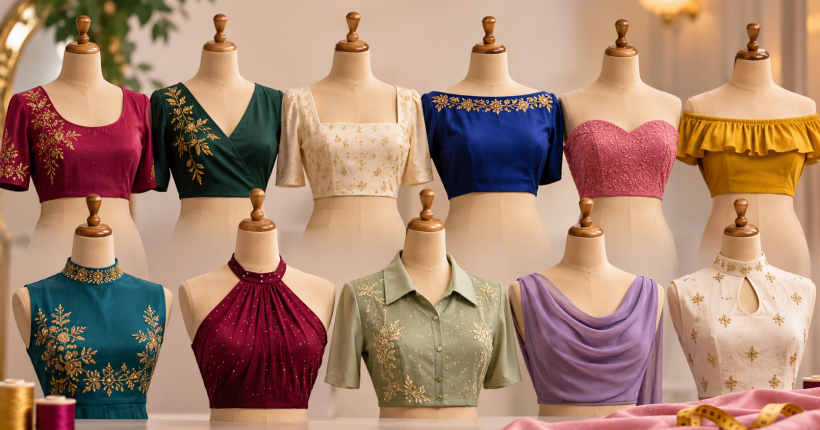
A garment silhouette refers to its overall shape and outline when worn. Different silhouettes create different visual effects and fitting requirements.
Common garment silhouettes include:
- A-line: Gradually widens from the waist or upper body towards the hem.
- Fitted: Follows the body’s shape through carefully planned pattern construction.
- Straight: Maintains a relatively consistent width through the garment.
- Fit-and-flare: Follows the upper body and becomes wider towards the lower portion.
- Empire waist: Features a raised waistline positioned above the natural waist.
The choice should depend on the wearer’s preferences, measurements and intended design. Designers should avoid assuming that one silhouette is suitable for everyone within a particular body shape category.
4. Choose the Right Fabric
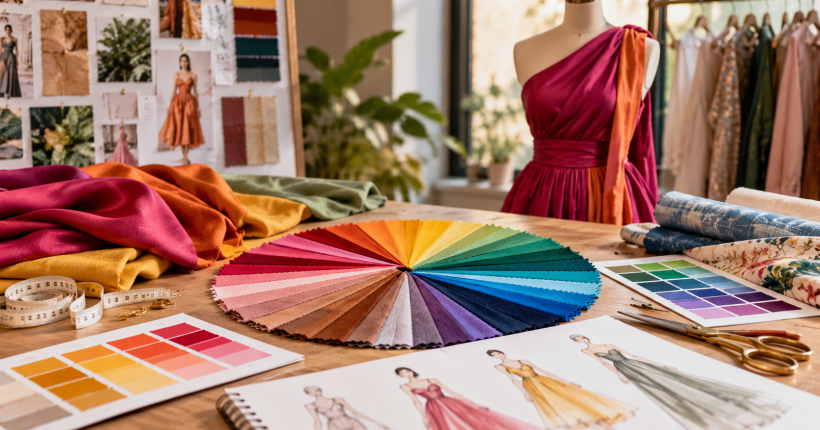
Fabric selection has a direct influence on how a garment fits and behaves. Different materials have different weights, textures, stretch properties and draping characteristics.
For example, cotton is often used for comfortable everyday garments, while satin can create a smooth finish for occasion wear. Georgette and chiffon are lightweight materials that can be used for flowing designs. Structured fabrics may be suitable for garments that require a more defined shape.
Designers should also consider fabric shrinkage, stretch and thickness before preparing the final pattern. These properties can affect measurements and garment construction.
5. Prepare the Garment Pattern
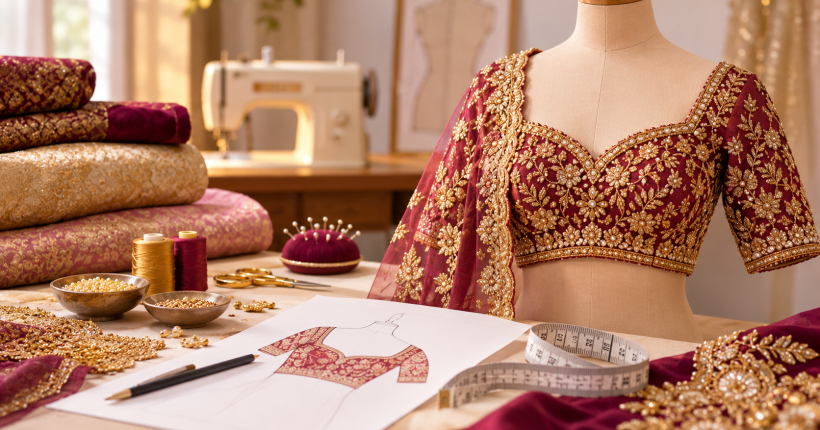
Pattern making converts body measurements and design ideas into shapes that can be cut from fabric. It is one of the most important stages in customised clothing production.
Designers prepare patterns for different garment components, such as the bodice, sleeves, collars, skirts and trousers. Adjustments may be needed to accommodate individual measurements and design requirements.
For example, a person may need additional room around the bust or hips while requiring a more fitted waist. Pattern adjustments help accommodate these differences.
Understanding darts, seams, ease allowance and garment proportions is essential for creating patterns that support both fit and movement.
6. Create a Sample Garment
Before cutting expensive or final fabric, designers can prepare a sample using an affordable test material. This sample is often called a toile or muslin in garment development.
A sample helps designers check the garment’s overall shape, measurements and construction. It also makes it easier to identify areas that require adjustment.
For example, the shoulder line may need correction, the waist may require additional shaping or the sleeve may need more movement allowance. Making these changes before final production can reduce fabric wastage and construction errors.
7. Conduct a Fitting Session
A fitting session allows the designer to examine how the garment sits on the wearer. It helps identify issues that may not be noticeable from measurements or a flat pattern alone.
During fitting, designers should check:
- Whether the garment feels comfortable.
- Whether the shoulders and neckline sit correctly.
- Whether the bust, waist and hip areas have sufficient room.
- Whether sleeves allow comfortable movement.
- Whether the garment length matches the intended design.
- Whether seams and closures are positioned properly.
The wearer should also be asked about comfort and movement. Their feedback helps determine whether additional adjustments are necessary.
8. Complete the Final Construction and Finishing
Once the necessary fitting corrections are completed, the designer can proceed with the final fabric and garment construction.
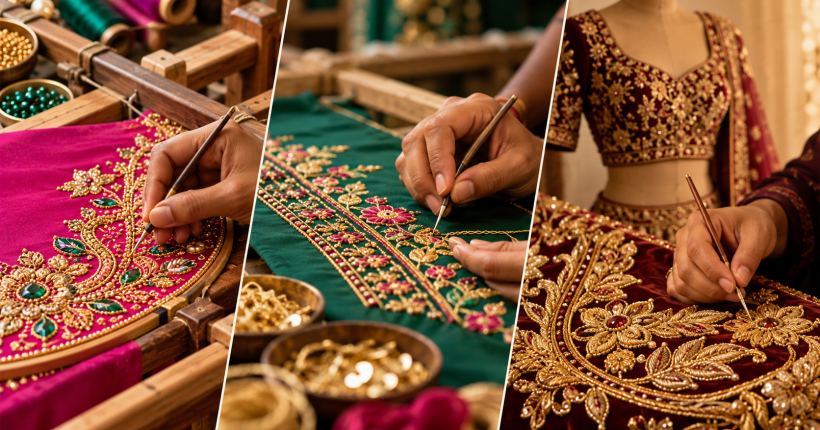
This stage includes stitching, seam finishing, attaching closures, preparing hems and adding decorative details. Depending on the design, embroidery, buttons, lace or other embellishments may also be included.
Finishing quality is important because uneven seams, unfinished edges and poorly attached details can affect the overall appearance of customised clothing.
Common Mistakes to Avoid When Designing Custom Clothing
Even an attractive garment design can become uncomfortable if important fitting details are overlooked. Fashion designers should pay attention to common mistakes during garment development.
Using standard sizes without checking measurements: Ready-made size charts are useful references, but they may not match an individual’s proportions.
Ignoring fabric properties: Stretch, weight and drape influence the final fit. A pattern designed for one fabric may not work exactly the same way with another.
Skipping sample fitting: Proceeding directly to final construction can lead to avoidable fitting problems.
Adding too little movement allowance: Clothing should allow the wearer to sit, walk, bend and move comfortably.
Following body shape rules too strictly: Body shape categories are guidelines, not fixed instructions. Individual preferences and measurements should guide the final design.
Overlooking finishing details: Necklines, armholes, seams and hems need proper finishing to create a neat garment.
The Role of Fashion Education in Learning Custom Clothing Design
Understanding body proportions and creating well-fitted garments are essential skills in fashion design. Designers need to consider individual measurements, fabric characteristics, pattern development and garment construction to create clothing that offers both comfort and a good fit.
Skill Haara provides fashion design training that introduces learners to the creative and technical aspects of garment development. Students gain knowledge of fashion illustration, textile studies, pattern making, draping and garment construction. These subjects help them understand how design ideas are translated into wearable garments.
Learning these techniques also gives students practical insight into taking measurements, preparing patterns and making fitting adjustments. Understanding how different fabrics behave and how garments are constructed helps them make better design decisions.
For anyone interested in pursuing fashion design, developing these practical skills provides a foundation for creating customised clothing with accurate measurements and proper fitting.
Conclusion
Creating well-fitted custom clothing requires an understanding of individual body proportions, accurate measurements and suitable garment construction techniques. Body shape categories can provide a starting point, but every design should be developed around the wearer’s actual measurements, comfort and personal preferences.
From selecting a suitable silhouette and fabric to preparing patterns and conducting fitting sessions, each stage contributes to the final result. For aspiring fashion designers, developing these skills can improve their understanding of garment development and help them create clothing that is both comfortable and thoughtfully designed.